
Architecture/Architecture (International) (RIBA Part 2) Master of
Start Dates
21 September 2026
Duration
The course is of three years duration with direct entry available to Year 2.
Overview
Why choose Huddersfield for this course?
- Industry recognised - this course is validated by RIBA and provides exemption from Part 2 of the ARB Examination in Architecture.
- Global challenges - explore how architecture responds to sustainability, technology and global cultural contexts.
- Industry experts - work with architects and researchers who challenge convention and treat you as a peer in creative debate.
Accreditation and Professional Links
Recognised connections to give you an extra edge when you graduate. Read More
Successful completion of this RIBA validated course provides exemption from Part 2 of the ARB prescribed Examination in Architecture.
The MArch Architecture course is design-centred and intended to enable you to thoughtfully and creatively explore the architectural and urban implications of environmental change and technological developments, as well as architecture's own inherent complexities and transformations. It is also important that you should develop a critical appreciation of the context - both physical and cultural - within which design work is undertaken. All this enables you to establish your own theoretical position, through which you will be expected to develop a high degree of sensitivity to the contexts and transformations within which design work is undertaken in geographical, cultural, social and technical terms.
Therefore, if you have not previously completed a period of practical training, you are urged to join the course in Year 1, but may also apply to join Year 2 after a portfolio interview. Students who have already completed a satisfactory period of practical training should apply to join the course in Year 2.
All design projects explore applications of sustainability and encourage a wide and plural outlook appropriate for both developed and developing countries. In this global worldview, understanding of progressive theories of design and the application of advanced construction methods co-exist with concern for the implementation of appropriate sustainable technologies, awareness of regional development issues and respect for appropriate building practices as well as advanced construction technologies.
The rationale and definition of ‘International’ both builds upon the studies undertaken as part of the Architecture (International) BA(Hons) degree awarded by the University of Huddersfield and acknowledges the reality of rapidly changing architectural practice in a fast moving, global context. Our course aims to prepare you for new and emerging forms of practice through the development of your personal learning skills and a deep understanding of the need for flexibility, adaptability, innovation and enterprise in your career.
As part of the process of becoming a professionally-qualified Architect in the UK, you are required to complete a period of supervised ‘practical training’, 12 months of which (commonly referred-to as the ‘Year Out’) is normally undertaken before commencing full-time academic study at Master’s level. This period of practical training constitutes Year 1 of the University of Huddersfield MArch course.

Career opportunities after the course *
Drafter
Architectural Technician
CAD Technician
Landscape Architect
Planning Officer
*Lightcast
Entry Requirements
There are two entry points into the Master of Architecture / Master of Architecture (International) programme:
Entry to Year 1:
You should possess an undergraduate degree in Architecture. You will have normally passed, or be exempt from, Part I of the RIBA examination in Architecture, but have not yet completed a period of practical experience. If you are progressing from University of Huddersfield’s BA(Hons) Architecture/Architecture (International) programme you should be ready to join the programme at this point. Should you be progressing from other institutions, you will be asked to attend a portfolio interview to determine your readiness to join this programme.
Entry to Year 2:
You should possess an undergraduate degree in Architecture. You will have normally passed, or be exempt from, Part I of the RIBA examination in Architecture, and will normally have completed a period of practical experience. If you are progressing from University of Huddersfield’s BA(Hons) Architecture/Architecture (International) programme but have not undertaken year one or you are progressing from another institution, you will be asked to attend a portfolio interview to determine your readiness to join the programme at this level.
Direct entry to year 3 will only be considered in exceptional circumstances.
You may be admitted to the M.Arch course with accreditation for prior learning (APL) and/or accreditation for prior experiential learning (APEL).
If your first language is not English, you will need to meet the minimum requirements of an English Language qualification. The minimum for IELTS is 6.0 overall with no element lower than 5.5, (a minimum of TOEFL 550 (Computer Based Toefl 213) score) or equivalent. Read more about the University’s entry requirements for students outside of the UK on our International Entry Requirements page.
Course Details
You will also choose 1 optional module in this year. The current optional modules are:
For more information on when and how we update our modules please see the ‘Legal Information’ section below.
Teaching and Assessment
Discover what to expect from your tutor contact time, assessment methods, and feedback process.
Your Career
Graduates of the Architecture MA are equipped for a broad range of roles within the architectural and built environment sectors. Many progress into positions such as Architect, Architectural Technician, CAD Technician, Revit Technician or Drafter, supporting the development of innovative design solutions. Opportunities also extend to roles including Urban Designer, Landscape Architect, Planner or Planning Officer, shaping how spaces evolve within communities. Skills gained on the course are equally valuable for careers in structural design engineering and wider design consultancy, allowing graduates to contribute to sustainable and future-focused environments.
Source: Lightcast data extracted from the Graduate Career Explorer
98%
Percentage of the University's postgraduate students go on to work and/or further study within fifteen months of graduating.
* HESA Graduate Outcomes 2022/23, UK domiciled.
£4 billion
The amount the UK architecture sector produced in Gross Value Added in 2023.
* Creative Industries Council
£38.5k
The average salary of our postgraduates fifteen months after graduating.
* HESA Graduate Outcomes 2022/23, mean salary, UK domiciled, full-time UK employment as main activity.
Huddersfield’s excellent facilities and relevant modules impressed me. Passionate tutors pushed me further than I thought I could go, helping me produce work I’m proud of. I’m now a Chartered Architect and director of my own practice.
- James Fearnley
Architecture MA Graduate
Fees and Finance
This information is for Home students applying to study at the University of Huddersfield in the academic year 2026/27.
Please note that tuition fees for subsequent years may rise in line with inflation (RPI-X) and/or Government policy.
From January 2027 the UK government is launching a new student funding system for people starting university education. Read more about the Lifelong Learning Entitlement (LLE)
For detailed information please visit https://www.hud.ac.uk/study/fees/
This information is for international students applying to study at the University of Huddersfield in the academic year 2026/27.
Please note that tuition fees for subsequent years may rise in line with inflation (RPI-X) and/or Government policy.
For detailed information please visit https://www.hud.ac.uk/international/fees-and-funding/
Materials:
You will need to supply your own materials during the course. These include sketchbooks, drawing equipment, materials for producing models and printing. The approximate cost of these items in recent years has been £150 in year one (the year out), £400 in year two and £500 in the final year. These costs may vary based on the materials you choose and the approximate costs are given as a guide only.
Scholarships and Bursaries
Discover what additional help you may be eligible for to support your University studies.
Tuition Fee Loans
Find out more about tuition fee loans available to eligible postgraduate students.
What’s included in your fee?
We want you to understand exactly what your fees will cover and what additional costs you may need to budget for when you decide to become a student with us.
If you have any questions about Fees and Finance, please email the Student Finance Team.
Gallery
See below for a glimpse at some of our facilities
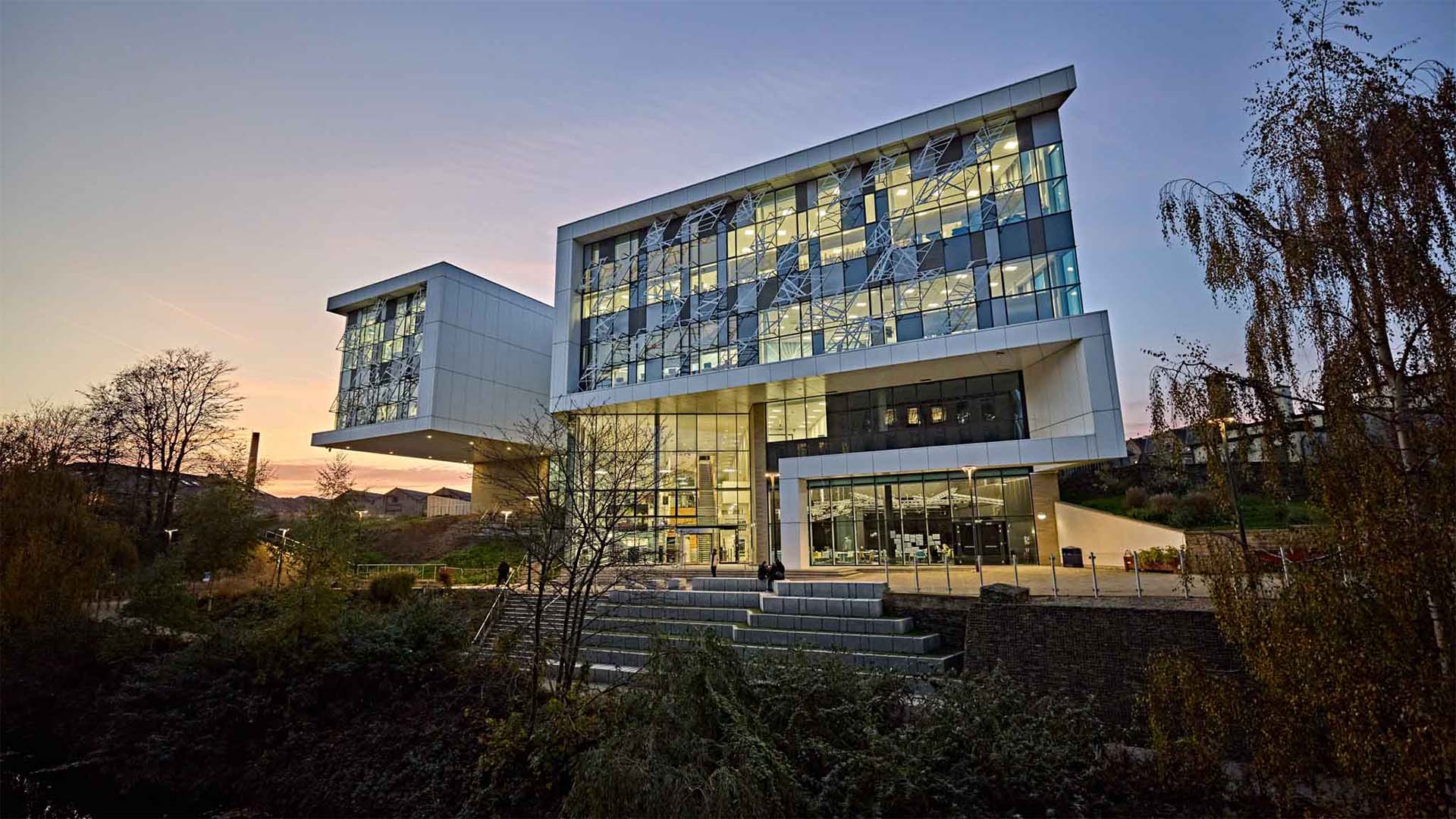
The Barbara Hepworth Building
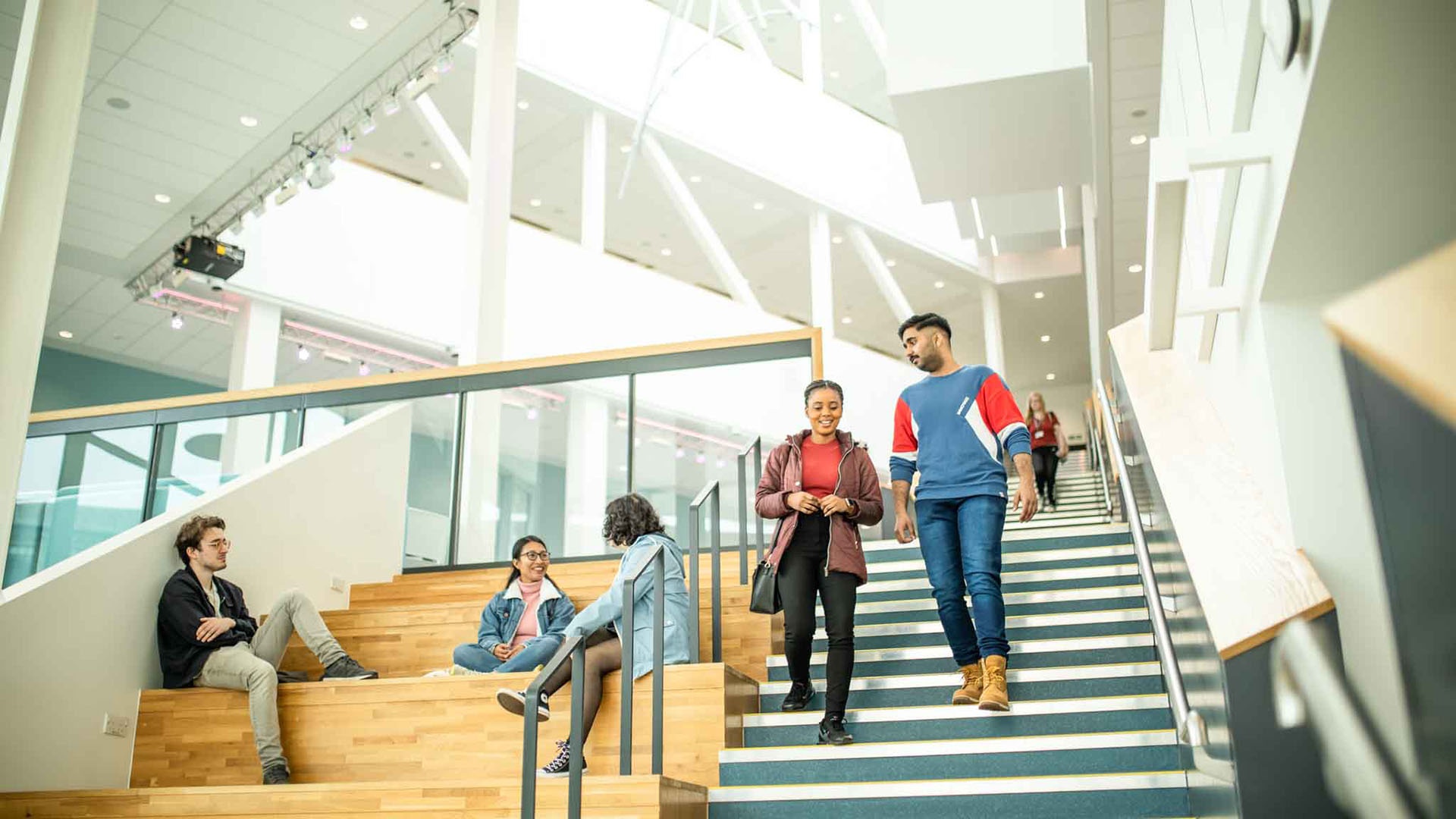
Inside the Barbara Hepworth Building
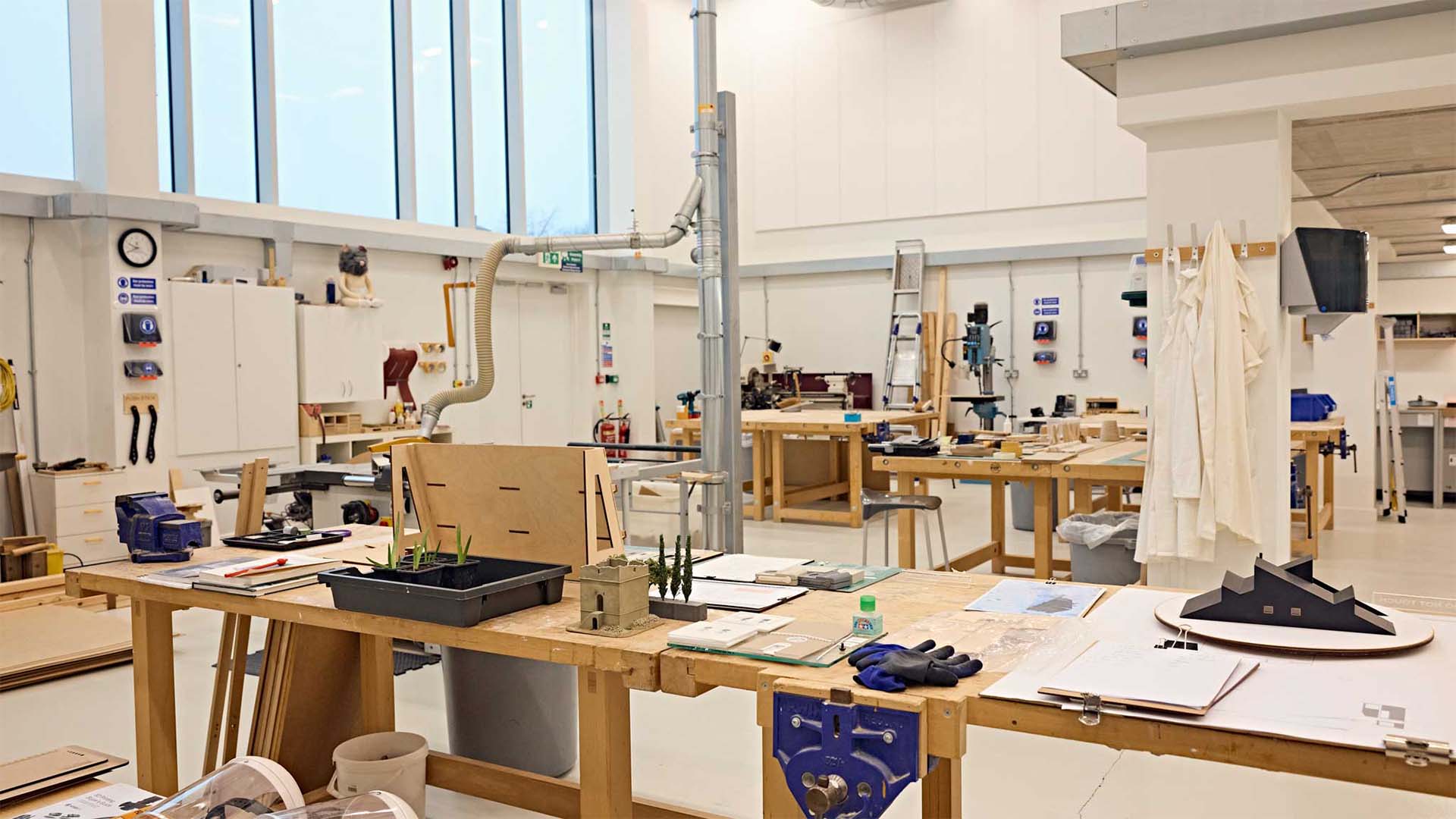
Architecture workshop in the Barbara Hepworth Buil

Group work facilities

THE UNKNOWN INSTITUTE - Benjamin Mundin
Utilising one of Huddersfield's monolithic derelict pieces of 'architecture' which has stood present on the ring road for over five decades. The brief called for an establishment of futuristic proportions in which exploration and development of an unprecedented unknown field can take place and documented. The idea is to create a centre for public and private engagement while observation, investigation and development can occur alongside. In short, it is an exploration centre which brings Huddersfield to the forefront of technological and scientific advancement.

ARTISANSHIP IN THE AGE OF DIGITAL FABRICATION - Im
BXT-001 is a guildhall created for and by the Guild of Digital Artisans. The project explores the possibilities of algorithmic design, machine learning, automation, and robotics as a non-human oblique representational system. The Guildhall is designed to induce awe and wonder just like the cathedrals of old, but also to demonstrate the sheer power, the possibilities of exponential radical new technologies.
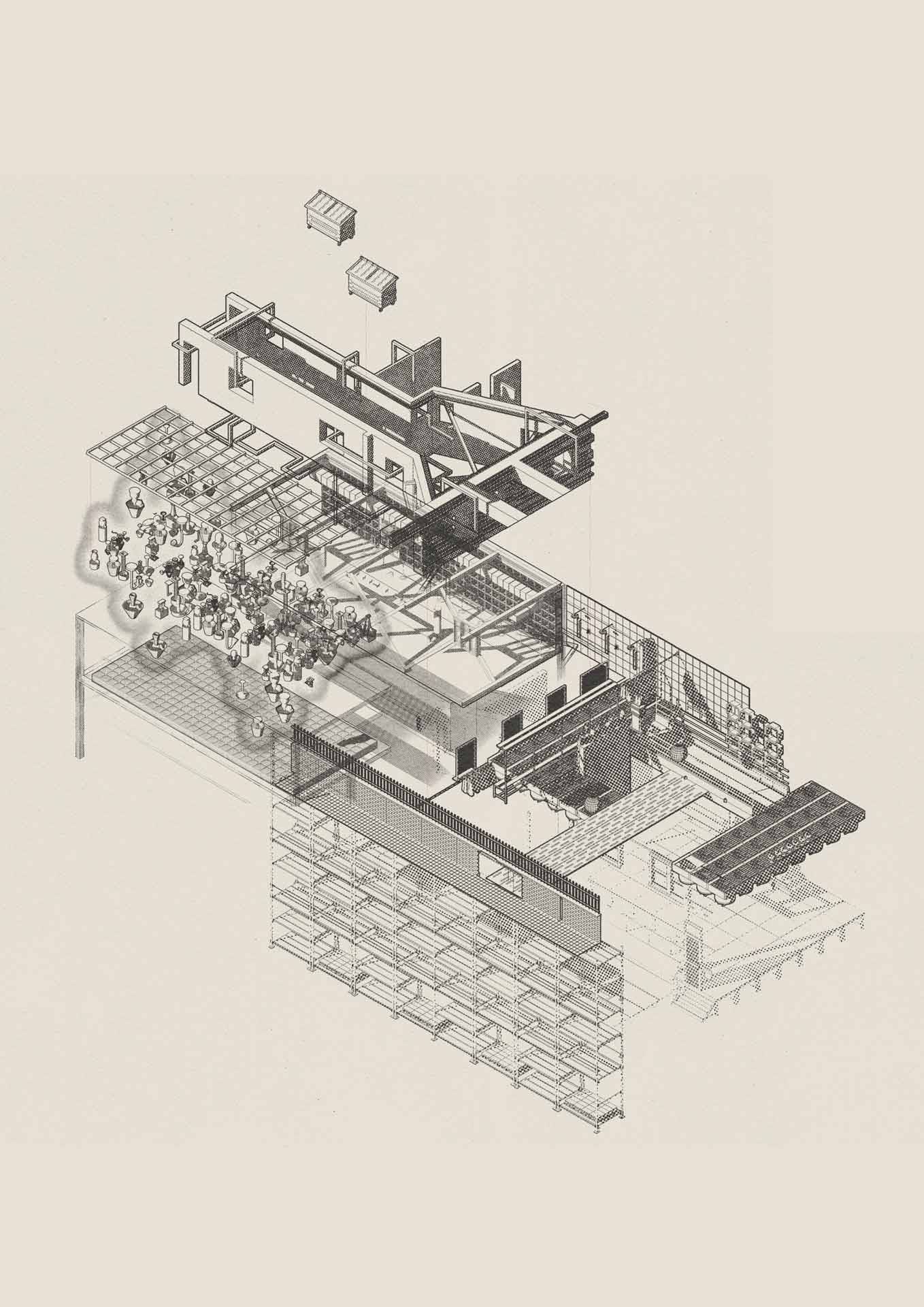
CESSPITS OF FILTH - Lizzie Osborne
This project is a speculative project what was there, what there is, and what could be. A starting point for me in this project of re-imagining Huddersfield was to contextualise my own understanding of this place as it is. Through the uncovering of the history of Huddersfield's iconic 80s gay club, The Gemini, I was able to relate my own identity to that of my place in history. My research into the Gemini club, its patrons and stories, helped to uncover an aspect of Huddersfield's identity that is somewhat obscured from public view.
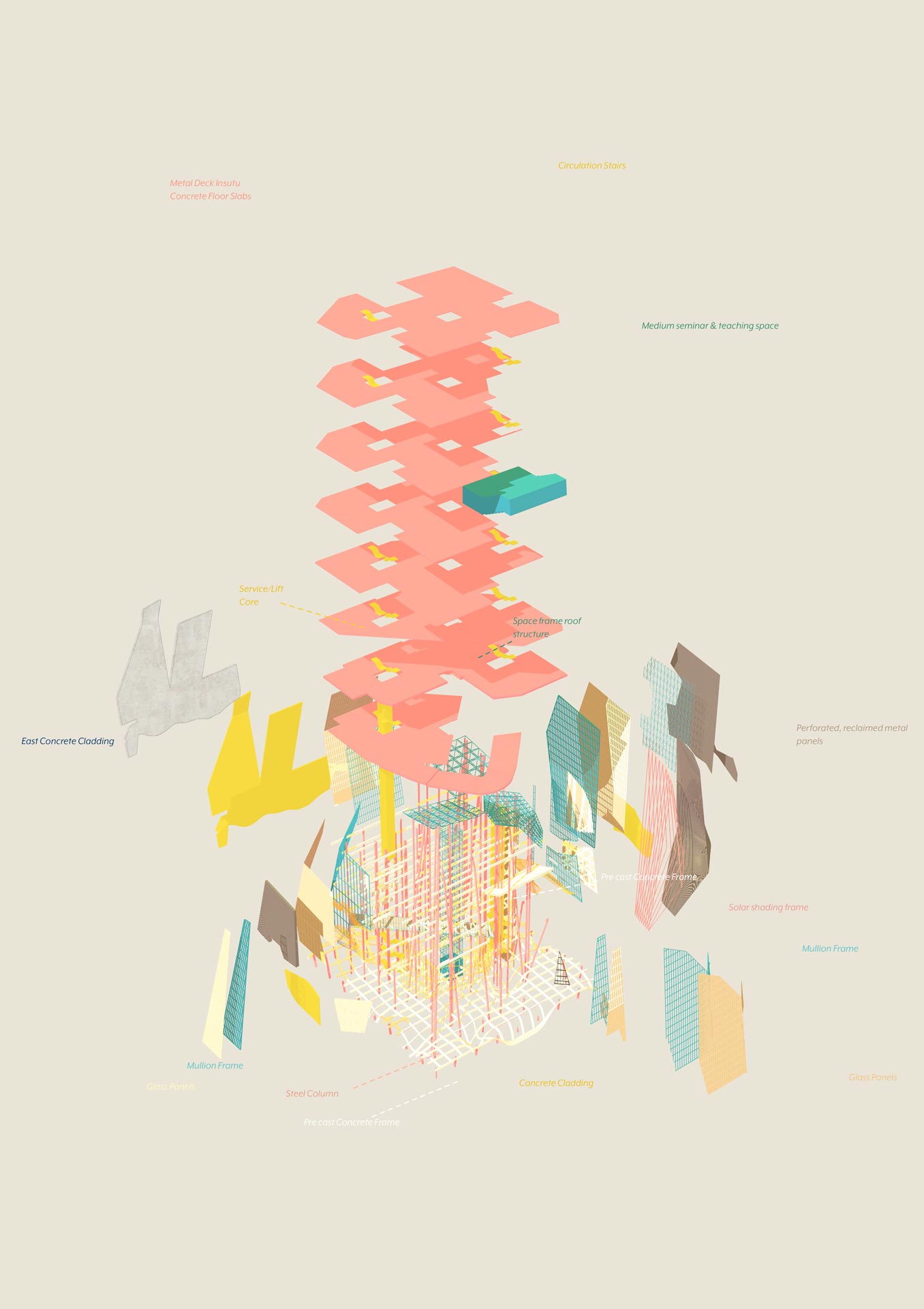
Niza Nyimbili
Niza became winner of the RIBA Yorkshire Student Gold Medal Part 1 award following graduation from the BA course in 2017. He went on to undertake his Master of Architecture and was nominated for RIBA Future Black Architects in 2018, RIBA Nort-East & Yorkshire Awards in 2019 and RIBA Silver Medal in 2019. He was announced as the winner of the Architects for Health MA Student Award the same year.
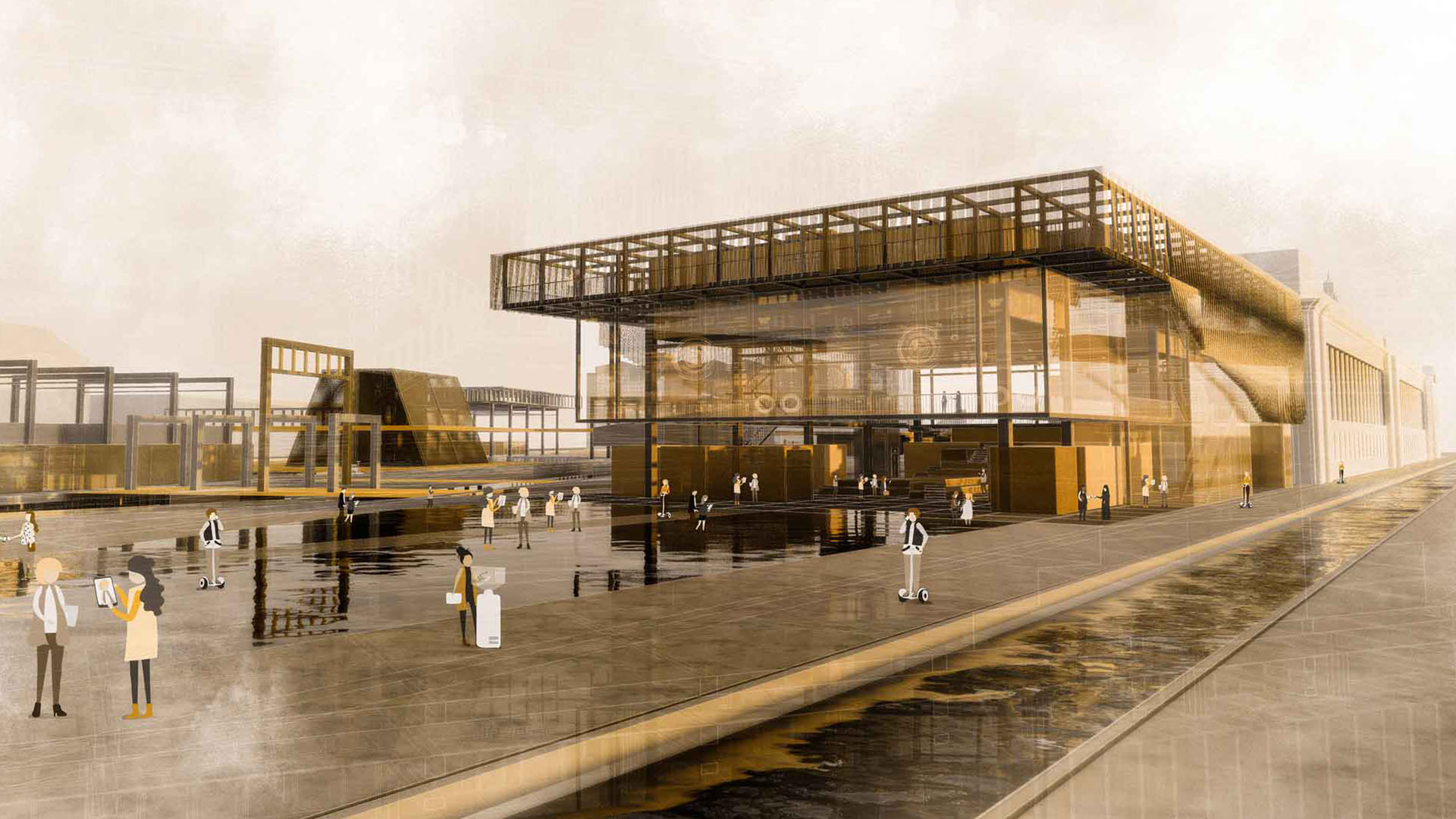
CIVIC CAMPUS [Narrative of Type-Formation] - Pav B
A Civic Campus where information-generation and exchange are open-access is proposed in response to the challenges of future flooding posed to Hull. The project offers a new masterplan for Hull. Among other sites it targets Queen's Gardens, a reclaimed dock which was the heart of Hull's historical fishing and shipping industries. The proposal re-imagines the dock as a flexible urban space of open learning within a civic setting.
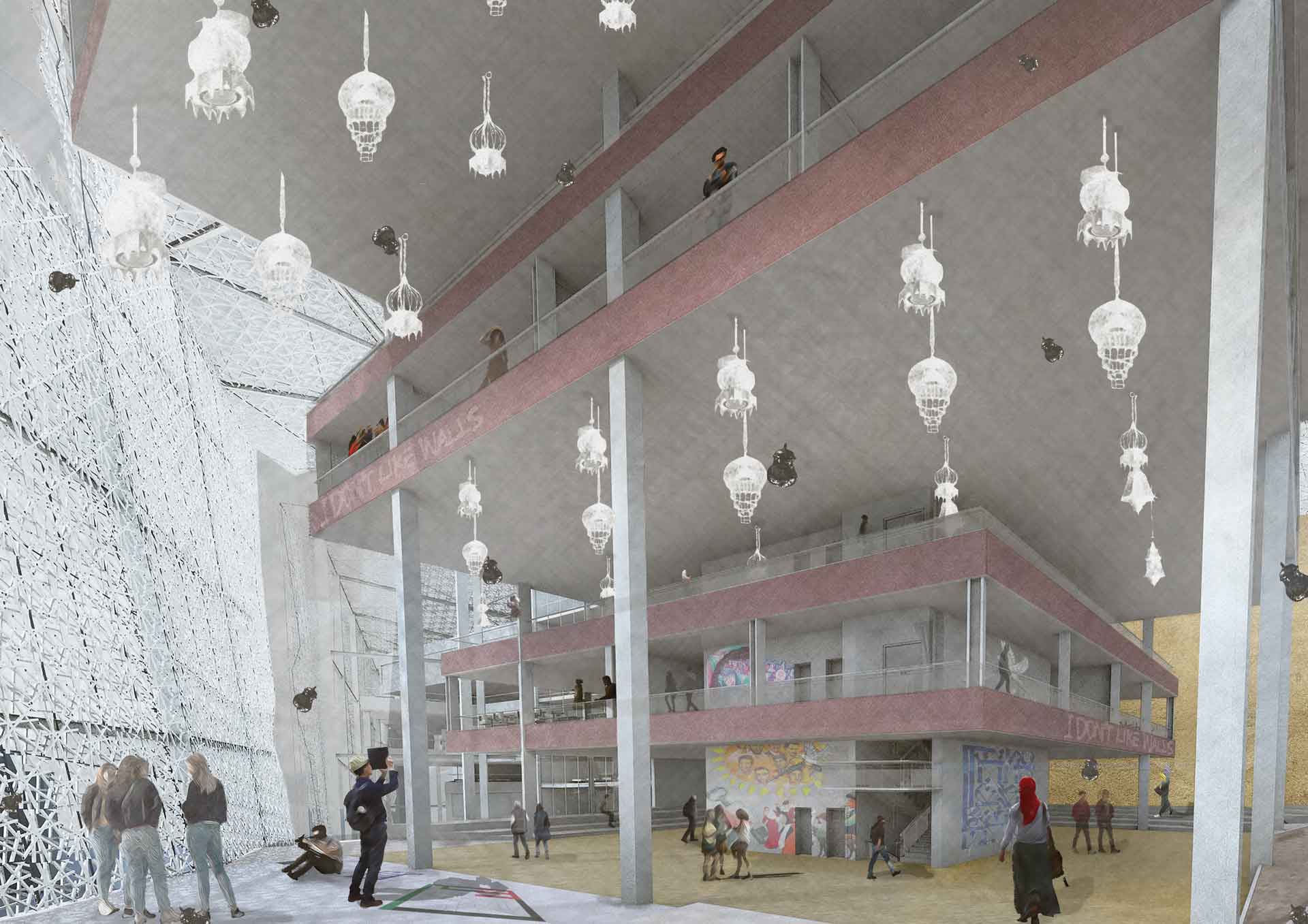
Zuhaib Tanweer
The academy is aimed at using what Palestinians and Israelis have in common - art, food, culture and history. It looks to engage people from both sides through various forms of art and cooking in a shared-fungible space- looking to create understanding and dialogue between Palestinians and Israelis. The concept is reconciling 1967; the 1967 borders are the point at which this conflict could have been drastically different and reconciling because the project looks at finding methods of dialogue, encounters, communication and coexistence between people that have known only to fear and hate one
Explore More
School Brochure
Discover more about The School of Arts and Humanities in our brochure

Sign up for Emails
Find out more about postgraduate study at Huddersfield and stay updated with the latest news and events.
Why Hud
Explore the unique opportunities and resources that make our institution a top choice for students seeking a well-rounded and future-focused education.

Explore Huddersfield
Make Huddersfield your home. A Yorkshire town, surrounded by beautiful countryside, with easy access to neighbouring cities; Leeds, Manchester and Sheffield. You’ll find plenty of places to eat, drink, shop and socialise, there’s ambitious plans for future development. Our campus is situated next to the town centre - making your commute a breeze.
Find out more
Your Student Experience
Get involved in great opportunities helping you to make friends from all across the world and create lifelong memories. Join one of over 100 societies with the Students’ Union, experience new cultures through global events, earn whilst you learn and build your skills via our Global Professional Award.
Learn more
Budget Friendly
Huddersfield is not only one of the friendliest towns, it also offers you a lower cost of living than most big cities. This means you could have more money to spend, making your uni experience even better. On campus you’ll also find plenty of facilities and services to help you budget and make your money go further.
Find out more
Sustainability Matters
We’re committed to sustainability and aim to be carbon neutral by 2030. Our plan includes reducing emissions, enhancing biodiversity, and improving wellbeing through sustainable buildings. We’re investing in digital solutions, low-impact travel, and embedding sustainability into teaching and research, investing over £1m in carbon reduction.
Find out more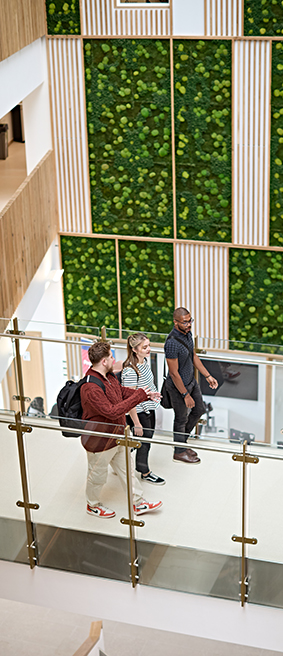
Committed to Your Future
Since 2015, we’ve invested £198 million to create spaces where you can learn, collaborate and thrive. We’re continuously investing in our campus with your wellbeing in mind—adding features that make our buildings healthier, more supportive and better places for you to succeed.
Read moreMore Info
Careers support
We know you’re coming to university to study on your chosen subject, meet new people and broaden your horizons. However, we also help you to focus on life after you have graduated to ensure that your hard work pays off and you achieve your ambition.
Find out more about careers supportStudent support
At the University of Huddersfield, you’ll find support networks and services to help you get ahead in your studies and social life. Whether you study at undergraduate or postgraduate level, you’ll soon discover that you’re never far away from our dedicated staff and resources to help you to navigate through your personal student journey.
See our support servicesTeaching Excellence
Great teaching is engaging and inspiring — it helps you reach your full potential and prepares you for the future. We don’t just teach well — we excel — and we have the awards and recognition to prove it.
Find out moreInspiring Academics
Our researchers carry out world-leading work that makes a real difference to people’s lives. Staff within the Department of Design and Architecture may teach you on this course.
Find out more about our staffResearch Excellence
You’ll be taught by staff who want to support your learning and share the latest knowledge and research.
Find out moreAccommodation
Looking for student accommodation? Huddersfield has you covered. HudLets has a variety of accommodation types to choose from, no matter what your preference. HudLets is the University’s approved accommodation service, run by Huddersfield Students’ Union.
Take a look at your optionsFurther Study
Many of our graduates stay at Huddersfield to complete postgraduate research degrees at Masters or PhD level.
Discover research degreesLegal information
When you enrol as a student of the University, your study and time with us will be governed by our terms and conditions, Handbook of Regulations and associated policies. It is important that you familiarise yourself with these as you will be asked to agree to them when you join us as a student. You will find a guide to the key terms here, along with the Student Protection Plan.
Although we always try and ensure we deliver our courses as described, sometimes we may have to make changes for the following reasons:
Changes to a course you have applied for but are not yet enrolled on
If we propose to make a major change to a course that you are holding an offer for, then we will tell you as soon as possible so that you can decide whether to withdraw your application prior to enrolment. We may occasionally have to withdraw a course you have applied for or combine your programme with another programme if we consider this reasonably necessary to ensure a good student experience, for example if there are not enough applicants. Where this is the case we will notify you as soon as reasonably possible and if you are unhappy with the change we will discuss with you other suitable courses we can transfer your application to. If you do not wish to transfer to another course with us, you may cancel your application and we will refund you any deposits or fees you have paid to us.
Changes to your course after you enrol as a student
Changes to option modules
Where your course allows you to choose modules from a range of options, we will review these each year and change them to reflect the expertise of our staff, current trends in research and as a result of student feedback or demand for certain modules. We will always ensure that you have an equivalent range of options to that advertised for the course. We will let you know in good time the options available for you to choose for the following year.
Major changes
We will only make major changes to non-optional modules on a course if it is necessary for us to do so and provided such changes are reasonable. A major change is a change that substantially changes the outcomes, or a significant part of your course, such as the nature of the award or a substantial change to module content, teaching days (part time provision), type of delivery or assessment of the core curriculum. For example, it may be necessary to make a major change to reflect changes in the law or the requirements of the University’s regulators or a commissioning or accrediting body. We may also make changes to improve the course in response to student, examiners’ or other course evaluators’ feedback or to ensure you are being taught current best practice. Major changes may also be necessary because of circumstances outside our reasonable control, such as a key member of staff being unable to teach due to illness, where they have a particular specialism that can’t be adequately covered by other members of staff; or due to pandemics, other disasters (such as fire, flood or war) or changes made by the government.
Major changes would usually be made with effect from the next academic year, but may happen sooner in an emergency. We will notify you as soon as possible should we need to make a major change and will consult with affected groups of students and any changes would only be made in accordance with our regulations. If you reasonably believe that the proposed change will cause you detriment or hardship we will, if appropriate, work with you to try to reduce the adverse effect on you or find an appropriate solution. Where an appropriate solution cannot be found and you let us know before the change takes effect you can cancel your registration and withdraw from the University without liability to the University for any additional tuition fees. We will provide reasonable support to assist you with transferring to another university if you wish to do so and you may be eligible for an exit award depending on how far through your course you are.
In exceptional circumstances, we may, for reasons outside of our control, be forced to discontinue or suspend your course. Where this is the case, a formal exit strategy will be followed in accordance with the student protection plan.
The Office for Students (OfS) is the principal regulator for the University.