Law student speaking in court

Law student in the Mock Court Room

Legal Practice (Master of Law and Practice)

Select the year

Start Dates

20 September 2027

Duration

4 years full-time 5 years inc. placement year

UCAS Tariff

128-120 points


Recent Awards For Excellence

Find out more about these awards
About this course

Overview

Why choose Huddersfield for this course?

  • This integrated Master’s combines an LLB and a Master’s in Law, helping you develop competences for SQE1 and SQE2 examinations.
  • Learn from practising solicitors and legal academics who bring real industry expertise into the classroom.
  • Practical experience throughout. From mooting and mock trials to volunteering in our Legal Advice Clinic, you’ll build real skills for legal practice.

Our integrated Legal Practice (Masters of Law and Practice) route is a unique programme that incorporates a full LLB(Hons) Law degree through to a Legal Practice qualification (MLP). This rigorous but highly rewarding degree prepares you for an exciting career in law and advocacy, with special emphasis on supporting you to develop competencies for the Solicitors Qualifying Exams (SQE1 and SQE2). 

This course aims to develop your skills in interviewing, advocacy, drafting legal documents, legal ethics/conducts/procedures, supporting you to develop a career as a solicitor in England and Wales. You’ll also gain a host of transferrable skills, such as how to construct an argument, how to communicate with clients, the importance of attention to detail and critical thinking, being creative, and the ability to work on your own and as part of a team. You can volunteer in the Legal Advice Centre and the Moot Scheme, where you’ll witness law in action and develop competences to be a solicitor. Our Mentoring Scheme and the Law Careers Fair will allow you to network with our Partner Law firms, introducing you to opportunities for work experience/employment with them.


Why study Legal Practice (Masters of Law and Practice)

You’ll be taught my both practitioners and legal academics who bring their industry and research expertise into classroom teaching. 

In the National Student Survey 2025, Law is ranked top in Yorkshire for learning opportunities. 

In addition to specialised legal databases (i.e., Westlaw, Lexis Library) and journals (via Heinonline, Jstor), you’ll have access to over 200 law eBooks (textbooks) via Law Trove, included in your course fees. 

As well as studying foundational law modules (Criminal Law, Contract Law, Land Law, Law of Torts, EU Law) you’ll also study practice based Functioning Legal Knowledge 1 (FLK1) and Functioning Legal Knowledge 2 (FLK2) modules, including: 

  • Dispute Resolution
  • Criminal Litigation
  • Business Law and Practice
  • Property Law and Practice 

You’ll have access to the Functioning Legal Knowledge 1 (FLK1) and Functioning Legal Knowledge 2 (FLK2) practice question database further supporting your learning and preparation for Solicitors Qualifying Exams (SQE). 

You’ll also have access during class to tailored databases to further support your SQE2 skills development, including interviewing, drafting, advocacy and legal research.

Throughout the course, you’ll also take a variety of optional academic and practice-focused modules to help you find your law area of interest, including but not limited to: 

  • Commercial Law and Practice
  • Immigration and Asylum Law and Practice
  • Family Law and Practice
  • Employment Law and Practice

In addition to developing your legal knowledge and skills during the modules, you’ll have the opportunity to participate in a range of extra-curricular activities, allowing you to put your legal knowledge and skills to the test. 

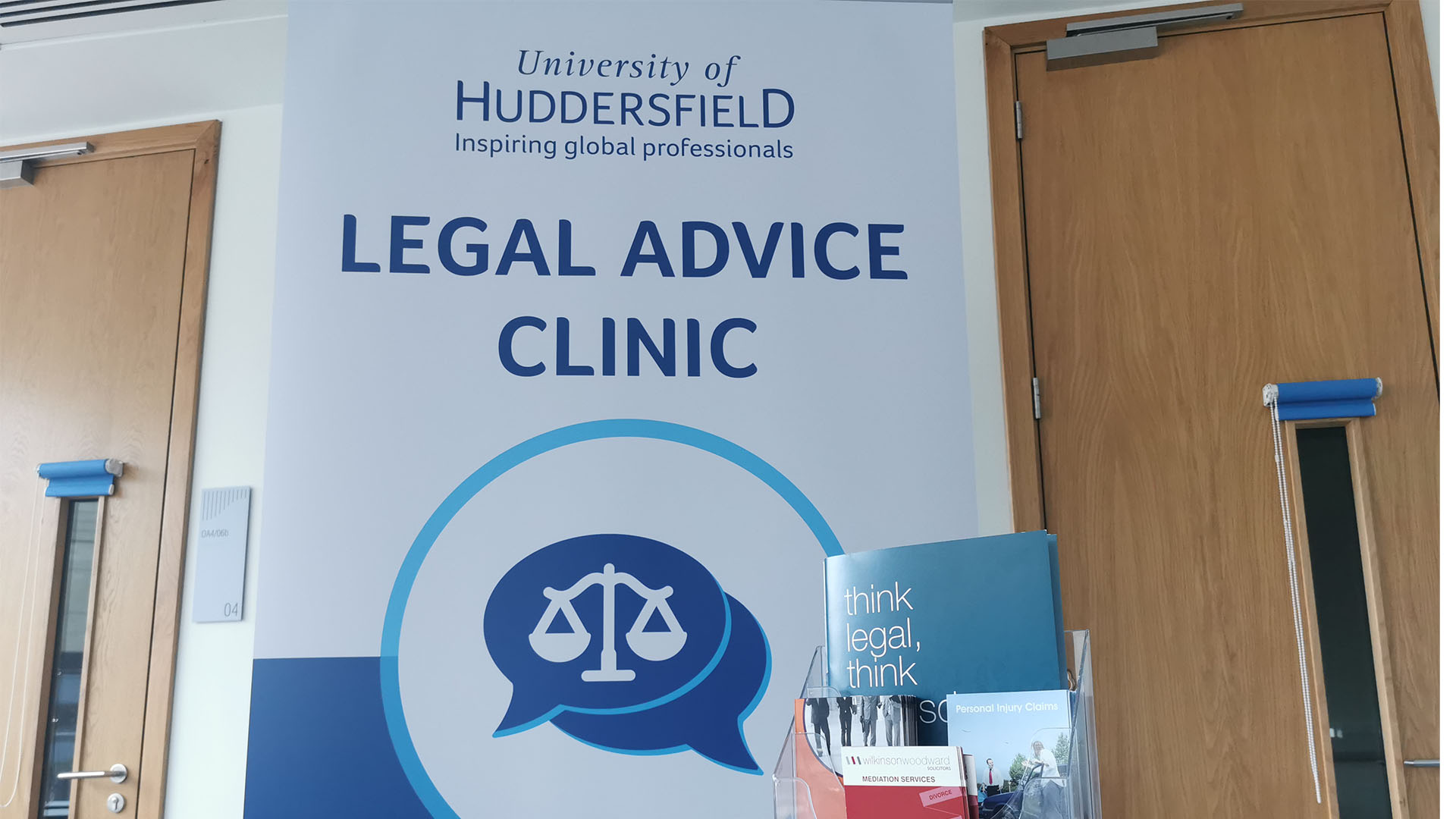
On campus you can access our purpose-built mock courtroom, where you’ll practice legal etiquette, prepare a mock case, and compete with other law schools in mock trials. You could also support out Legal Advice Clinic, providing legal support to real clients under supervision, as either a modular or volunteer opportunity.  

Although this course will support you to develop competences which are required to be a solicitor, the wide range of transferrable skills you’ll develop will introduce you to careers opportunities in other legal, law-related and non-legal sectors. 

Career opportunities after the course *

Conveyancing Assistants

Paralegals

Legal Assistants

Conveyancing Paralegals

Patent Paralegals

*Lightcast

Who can apply?

Entry Requirements

ABB-BBB at A Level.
DDM in BTEC Level 3 Extended Diploma.
128-120 UCAS tariff points from a combination of Level 3 qualifications.


If you are wishing to transfer in from another University part-way through your degree, you will usually need to have successfully completed a whole year of study with a minimum of 50% overall grading. You will also need to have met the foundational legal knowledge/core knowledge areas requirements of the previous year(s) of study to the one you are applying entry for.

You may be eligible to gain Recognition for your Prior Learning (RPL).

If your first language is not English, you will need to meet the minimum requirements of an English Language qualification. The minimum for IELTS is 6.0 overall with 6.0 in writing with no element lower than 5.5, or equivalent. Read more about the University’s entry requirements for students outside of the UK on our International Entry Requirements page. If you have alternative qualifications or do not meet the IELTS requirement we also offer a range of Pre-Sessional English Programmes.

Other suitable experience or qualifications will be considered. For further information please see Undergraduate entry requirements.

We offer a range of fair access opportunities and support to help students progress to higher education. You may also be able to earn extra UCAS points. For more details, please see our Contextual Admissions Guidance.

What will you learn?

Course Details

Law is more than textbooks and theory — it’s communication, teamwork, research and confidence. This module helps you build the core skills you’ll need to thrive in your degree and beyond. You’ll practise public speaking, legal writing, referencing, problem-solving and more — all through real-world, group-based tasks. It also helps you reflect on your personal development and grow the kind of transferable and professional skills employers value. Whether it’s time management, resilience, or the ability to work with others, you’ll develop the confidence and clarity to start shaping your future career. It’s about preparing you to succeed not just as a law student, but as a professional — wherever your legal knowledge takes you.

This module explores all the foundational and fundamental aspects of the creation of a legal agreement that is a contract. It explores how a contract comes to light, how it can evolve based on the inclusion of certain terms and how the courts keep upholding underlying principles which underpin contract law, while balancing ideas of justice and public interest and policy. You will learn some of the key guiding principles in Contract law, key debates and discussions on the underlying idea of contract law, the evolution of its principles and rules, the role of contract and the limits to what it can achieve.

This module will enable you to acquire a thorough understanding of the principles of criminal liability, and how these principles are applied to specific offences. A range of offences will be considered, including homicide, offences against the person (such as assault and battery) and property offences (theft, burglary, robbery and fraud). You'll also acquire knowledge of the basis of a defendant’s liability and the skills to apply your knowledge in problem situations.

The English legal system is complex, rooted in history and constantly evolving. This module introduces you to the key elements of the English legal system and also looks at the procedure to enact legislation, an analysis of the anatomy of an Act of Parliament, delegated and secondary legislation and principles of statutory interpretation. A brief history of the evolution of common law is also considered, together with an analysis of the current English court system and the continuing importance of the doctrine of precedent. In this module you'll also learn the methods and techniques necessary for using legal resources, such as cases and legislation to construct legal arguments.

Laws don’t just reflect society — they shape it. In this module, you’ll explore how legal systems interact with race, gender, class and popular culture. From feminist and critical race theory to legal injustices shown in films and media, you’ll challenge the idea of law as neutral and ask who the system really serves. It’s an eye-opening introduction to law as a force for change — helping you build critical thinking skills that go far beyond the courtroom.

In this module you will explore how power is used (and sometimes misused) in the UK, and what happens when governments, courts and ordinary people clash. You’ll explore the legal workings of the UK, examine real-world controversies, and debate whether our system truly delivers justice. By the end, you’ll understand how the law affects your rights, your freedoms, and the society you live in — and how to use that knowledge to challenge injustice.

Following the exit of the United Kingdom from the European Union in 2000, the knowledge of EU law has never been more relevant. This module gives you a clear understanding of how the European Union works — its institutions, decision-making processes, and the legal principles behind the internal market and freedom of movement. You’ll explore the key legislative sources, landmark developments, and how EU law interacts with UK law today. By the end, you’ll have the insight to understand trade, travel, and cross-border legal issues in a post-Brexit world — knowledge that’s valuable for careers in law, business, and international relations. .

In this module you will learn about trusts and how they relate to broader themes about certainty and flexibility (through equity) in the application of the law. You will have the opportunity to learn about the life of the trust: how various trusts are created, how they operate, by whom, and what happens when trusts go wrong, how to gather evidence, assess the strength of the client’s case and decide whether to seek equitable remedies such as specific performance or consider alternative dispute resolution.

In this module, you’ll learn about the structure of land law in England and Wales — exploring the different types of estates, the rights and restrictions that can exist over someone else’s land, and the rules for creating, protecting, and transferring those rights. You’ll see how these principles play out in real scenarios, from lease agreements to shared ownership disputes, giving you the skills to navigate one of the most practical and impactful areas of law.

This module explores civil wrongs like negligence, defamation, and nuisance. You’ll analyse how the courts decide fault, how damages are calculated, and what makes a claim succeed. Using real-life cases, you’ll learn to apply legal tests and sharpen your ability to think clearly and argue with precision.

You will choose 2 optional modules from either Route A OR Route B, which may include:

Every limited company in England and Wales is built on a legal framework — and this module shows you exactly how it works. You’ll explore why concepts like limited liability and separate legal personality are so vital to business, and how they make enterprise possible. From shareholder rights to directors’ duties, you’ll examine the inner workings of companies and see how the law balances competing interests — whether between directors and shareholders, or between the company and its wider stakeholders. By understanding these relationships, you’ll be able to spot potential conflicts, assess the legal risks, and apply solutions that work in practice.

In this module, you'll have the opportunity to gain an understanding of the specialist legal principles of commercial law, within relevant aspects of their social, institutional and cultural contexts. A wide range of commercial transactions are regularly conducted by businesses who use agents and this practice has given rise to disputes about the rights and obligations of the businesses, agents and customers. You'll also learn about the body of legal principles that has emerged to provide solutions to these types of disputes and the growing reliance on alternative methods such as mediation, arbitration and the use of the Financial Ombudsman Service.

For more information on when and how we update our modules please see the ‘Legal Information’ section below.

You will choose 2 optional modules from either Route A OR Route B, which may include:

Being able to argue your case clearly and confidently is a vital skill for any aspiring lawyer, whether you’re aiming to be a solicitor or a barrister. This module introduces you to ‘mooting’ — a practical exercise where you debate real legal problems in a simulated courtroom setting. You’ll develop your ability to analyse complex issues, structure arguments, and respond on your feet — skills that go beyond the classroom and will boost your confidence for professional legal practice.

Evidence is at the heart of every legal case — and knowing what can (and can’t) be used in court can make or break at case. In this module, you’ll explore the rules of evidence in both civil and criminal cases in England and Wales, learning how they shape investigations, trials, and verdicts. You’ll work through real and hypothetical scenarios to see how the rules apply in practice — from challenging unreliable testimony to handling digital evidence. Along the way, you’ll build practical skills in analysis, critical thinking, and case preparation, gaining the insight to recognise not just what the law says, but why it works the way it does in different social, cultural, and institutional contexts.

This module introduces you to the role of legal professionals in England and Wales, with a strong focus on ethics, professionalism, and what’s expected of a solicitor. You’ll explore real and fictional case scenarios to understand what acting with honesty, integrity, and good judgement looks like in practice — and why it matters when advising clients. Alongside this, you’ll build essential skills you’ll use throughout your degree and into your legal career: research, drafting, advocacy, letter writing and more. You'll also begin to develop your commercial awareness — the ability to understand how law operates within business and society.

For more information on when and how we update our modules please see the ‘Legal Information’ section below.

This module requires you to find a work placement in a business environment – this could be private sector, public sector or not-for-profit. This will allow you to develop the skills and techniques learnt in years 1 and 2 in a real business environment and will help you develop transferable skills to better prepare you for your future.

From startups and multinationals, businesses are built on legal foundations. In this module, you’ll step into the role of a legal adviser and explore how the law supports, shapes, and sometimes challenges the people who run and invest in companies. You’ll look at how businesses are created, financed, bought, sold — and what happens when things go wrong, like insolvency. It’s about developing your ability to give clear, practical and ethical legal advice — and gaining insight into the commercial world that many legal professionals work in.

This practical module follows the full journey through the criminal justice system — from a suspect’s arrival at the police station through to trial and sentencing in the courts. You’ll explore real procedures, from pre-trial decisions and evidential issues to courtroom arguments and outcomes. It’s especially valuable if you’re considering a career as a solicitor, barrister, police officer, probation officer, or anyone working in the wider justice system. It gives you a detailed, realistic look at how law works on the ground.

In this module you'll learn about the practice and procedure of dispute resolution in a range of civil legal problems including analysing the meris of a claim and its defence. You'll learn how to understand the differences between settling a dispute, the use of mediation and arbitration as well as the steps for commencing, responding to or progressing a claim and preparation of a case for trial, the trial itself and any post-trial steps.

In this module you’ll explore residential conveyancing from start to finish, including sales of freehold and leasehold property, new builds, registered and unregistered titles. You’ll also look at commercial transactions, with a focus on leases. Along the way, you’ll get hands-on with the steps solicitors take when transferring ownership and even cover how solicitors handle client money in property deals. It’s an essential introduction to one of the busiest areas of legal practice — giving you the tools to understand high-stakes property transactions.

This module takes you through the legal side of death and inheritance — from creating a valid will to valuing an estate and applying for probate. You’ll explore what happens when there’s no will, how inheritance tax is calculated, and how responsibilities fall to personal representatives and trustees. You’ll also examine disputes and legal duties in administering estates. It’s a vital area of law, especially if you're thinking about private client work — where empathy, clarity and technical skill are key.

This module introduces you to the variety of tax issues that solicitors deal with every day: income tax, capital gains tax, corporate tax, VAT, self-assessment and more. You’ll learn how to advise clients, spot problems early, and understand how tax law affects individuals and businesses. It’s especially valuable if you’re considering commercial law or private client work.

This module will provide you with knowledge and a practical understanding of the Solicitors Regulation Authority's Standards and Regulations, together with legislation and regulations regarding client confidentiality, provision of financial services advice and anti money laundering. You will gain a practical understanding of the duties and responsibilities that a solicitor has to their client, their client's data and their client's financial resources. You will understand the prevalent nature of Professional Conduct and Regulation and learn about the Solicitors Accounts Rules and general accounting principles.

This module brings together everything you’ve learned across your Functioning Legal Knowledge (FLK) modules from Years 1 to 3, preparing you thoroughly for the Solicitors Qualifying Exam (SQE) 1. You’ll focus on the core knowledge and skills that the SQE demands, building your confidence and competence so you’re ready to succeed.

This module brings together the practical legal skills that you’ve developed so far and prepares you for the Solicitors Qualifying Exam (SQE) 2. This part of the SQE focuses on your real-world skills — from client interviews and note-taking to legal analysis, advocacy, research, writing, and drafting. You’ll work through practical tasks and workshops across key areas like Criminal Litigation, Dispute Resolution, Property Practice, Wills and Probate, and Business Law. You’ll also apply your knowledge of core legal principles, turning theory into practice — exactly what the SQE 2 exam tests.

You will choose 3 x 20 credit modules OR 1 x 40 credit and 1 x 20 credit modules, which may include:

This module is a clinical and a practical module with a client focused application of theory to practice. You'll have the opportunity to learn about the management of clients who present with a range of legal problems and the empowerment of those clients through the provision of legal advice. You’ll also have the opportunity to develop your professional skills including interviewing, researching, problem solving, reflective practice, drafting and advising. This module acts as an integrative medium to support clinical learning and show the application of theory to practice.

The aim of the module is to introduce you to the needs of the client and to give you a broad overview of some of the main areas of work undertaken by a solicitor in commercial practice. You'll learn about commercial contracting, intellectual property and commercial dispute resolution. The module will be particularly useful if you are planning a career as a commercial solicitor; it would also be useful if you are considering starting your own business, or contemplating a career generally in the commercial sector.

In this module, you will explore the principles and practice of immigration and asylum law. You will gain a clear understanding of its nature, scope, and processes, and learn how to identify and address common issues and procedures. Topics include the right of abode, regulation of immigration and asylum work, state protection and convention grounds, exclusions under the Refugee Convention, human rights in the immigration and asylum context, as well as deportation and removal.

This module will give you a practical understanding of the main areas of family law, including divorce and separation, financial remedy, children and domestic abuse. You will explore the legal principles governing the breakdown of adult relationships for both married and unmarried couples and associated financial remedies. This will be contrasted with how the law differs for cohabiting couples. In the Family Law and Practice module you learn the potential solutions for survivors of domestic abuse and related private law. You will explore how matters may be resolved through the court procedures and without it. The module uses case studies that show the procedure for a client’s matter from start to finish, including the use of practical legal skills to complete court documents and represent a client in legal proceedings.

In this module you'll consider the law, practice and procedure in employment cases including that relating to employment contracts and status, dismissal for fair and unfair reasons, discrimination and Transfer of Undertakings Regulation (TUPE ) transfers. You'll examine the employment tribunal procedure for bringing and responding to claims, learn about compensation and formal settlement of an employment claim and will examine the progress of cases through the employment tribunal to final hearing.

For more information on when and how we update our modules please see the ‘Legal Information’ section below.

Teaching and Assessment

Discover what to expect from your tutor contact time, assessment methods, and feedback process.

Global Professional Award

At Huddersfield, you’ll study the award-winning Global Professional Award (GPA) alongside your degree* — so you’re ready for the career you want, whatever subject you choose.

Interested in a placement?

Placements

The course offers an optional one-year (48 weeks) work placement after the second year, in the UK or abroad.

Our Placement Office works with national and international employers to ensure excellent work experience opportunities are available to you on sandwich courses as well as giving advice in areas such as interview skills and preparing CVs and covering letters.

Previous placement providers have included Altaf Solicitors, Ashman’s Solicitors, CEIC Centre d'estudis Cunit, Conveyancing Liability Solutions (CLS) Ltd, PPG Architectural Coatings EMEA, Ridley and Hall and Taylor Price Legal Ltd.

The placement year is a valuable tool that can enhance your employability and help you to develop as an individual. It is acknowledged that graduates with industry experience are generally much more attractive to employers.

My placement gave me the hands-on experience of working in a professional environment and as a result has prepared me for the next stages of my career. The placement has given me a platform to develop and gain more skills and now I am at the stage where I am very confident in my ability.

- Mavua Maluasi
Placement Student, CLS Risk Soutions

Where could this lead you?

Your Career

Previous graduates from this course have gone on to roles such as Industrial Disease Paralegal, Legal Administrative Assistant, Legal Assistant in organisations including Slater and Gordon, Greenhead Solicitors, Ramsden Solicitors LLP.

86% of graduates from this subject who are in work and/or further study fifteen months after graduating.

* HESA Graduate Outcomes 21/22, UK domiciled graduates, other activities excluded.

Not only in the University great at teaching you about law, but also helps you with your day to day application. Getting involved with things like the mooting and the Law Clinic really helps when I am talking to clients on a day to day basis. 50% of your job is talking to people and the other 50% is obviously doing the work. So at Huddersfield, you become the full package.

- Shamim Miah
Studied Law LLB(Hons). Currently works as a Corporate Solcitor at Ison Harrison.

Our graduates work across the legal sector.

Ison Harrison logo Kirklees Council logo Schofield Sweeney logo Ramsdens logo
How much will it cost?

Fees and Finance

£10,050 per year

This information is for Home students applying to study at the University of Huddersfield in the academic year 2027/28.

Modules credits can range from 15 to 60, dependent on the content of the module. Read more about total credits required for a range of degrees, to allow you to calculate the potential total cost.

Please note that tuition fees for subsequent years may rise in line with inflation (RPI-X) and/or Government policy. 

From January 2027 the UK government is launching a new student funding system for people starting university education. Read more about the Lifelong Learning Entitlement (LLE).

For detailed information please visit https://www.hud.ac.uk/study/fees/

£17,600 per year

This is the tuition fee for 2026/27 entry. Tuition fees for 2027/28 will be published once the information becomes available.

This information is for international students applying to study at the University of Huddersfield in the academic year 2026/27.

Please note that tuition fees for subsequent years may rise in line with inflation (RPI-X) and/or Government policy. 

For detailed information please visit https://www.hud.ac.uk/international/fees-and-funding/

Home

This is the tuition fee for 2026/27 entry. Tuition fees for 2027/28 will be published once the information becomes available.

The tuition fee for a placement year is £1000. If you go on work experience or work placement, you will need to fund your own travel and/or accommodation costs to and from the placement.  Please be aware that if your placement is outside of the UK, you will still be responsible for your travel and living expenses and may need to consider issues like health care and insurance costs.

International

This is the tuition fee for 2026/27 entry. Tuition fees for 2027/28 will be published once the information becomes available.

The tuition fee for a placement year is £3,300. If you go on work experience or work placement, you will need to fund your own travel and/or accommodation costs to and from the placement.  Please be aware that if your placement is outside of the UK, you will still be responsible for your travel and living expenses and may need to consider issues like health care and insurance costs.

Scholarships and Bursaries

Discover what additional help you may be eligible for to support your University studies.

Tuition Fee Loans

Find out more about the Lifelong Learning Entitlement tuition fees loans available to eligible undergraduate students.

What’s included in your fee?

We want you to understand exactly what your fees will cover and what additional costs you may need to budget for when you decide to become a student with us.

If you have any questions about Fees and Finance, please email the Student Finance Team.

Explore More

Why Hud

Explore the unique opportunities and resources that make our institution a top choice for students seeking a well-rounded and future-focused education.

TypeError: Cannot read property "query" from undefined
Ask us a question