...

Huddersfield University Campus

Chemistry MChem

Select the year

Start Dates

21 September 2026

Duration

4 years inc. placement year

UCAS Tariff

104-120


Recent Awards For Excellence

Find out more about these awards
About this course

Overview

Why choose Huddersfield for this course?

  • Prepare for careers in chemical manufacturing, environmental consultancy, healthcare, patent law, pharmaceutics and teaching.
  • Learn core chemistry fundamentals, focusing on organic, inorganic, physical, and analytical science.
  • You'll learn from the best, as the University of Huddersfield has been rated Gold in the Teaching Excellence Framework (TEF) 2023

Accreditation and Professional Links

Recognised connections to give you an extra edge when you graduate. Read More

Known as the central science, chemistry provides a fundamental understanding of how the world works at a chemical level. Since the 1840s, Huddersfield has provided a strong chemistry education to its students, supporting the local textile and dyeing industries as a result. Today, you’re not limited just to these industries. A Chemistry MChem degree at Huddersfield can take you far as you make contributions to a wide variety of fields, including chemical analysis and manufacturing, pharmaceutics, environmental consultancy, healthcare and teaching.

Why study Chemistry MChem

At Huddersfield, you’ll be joining a chemistry department with a long and illustrious history. Accredited by the Royal Society of Chemistry, this advanced course is a step up from the undergraduate Chemistry BSc(Hons) course. It will prepare you with a solid understanding of the fundamentals of chemistry, with a focus on the core areas of organic chemistry, inorganic chemistry, physical chemistry and analytical science.

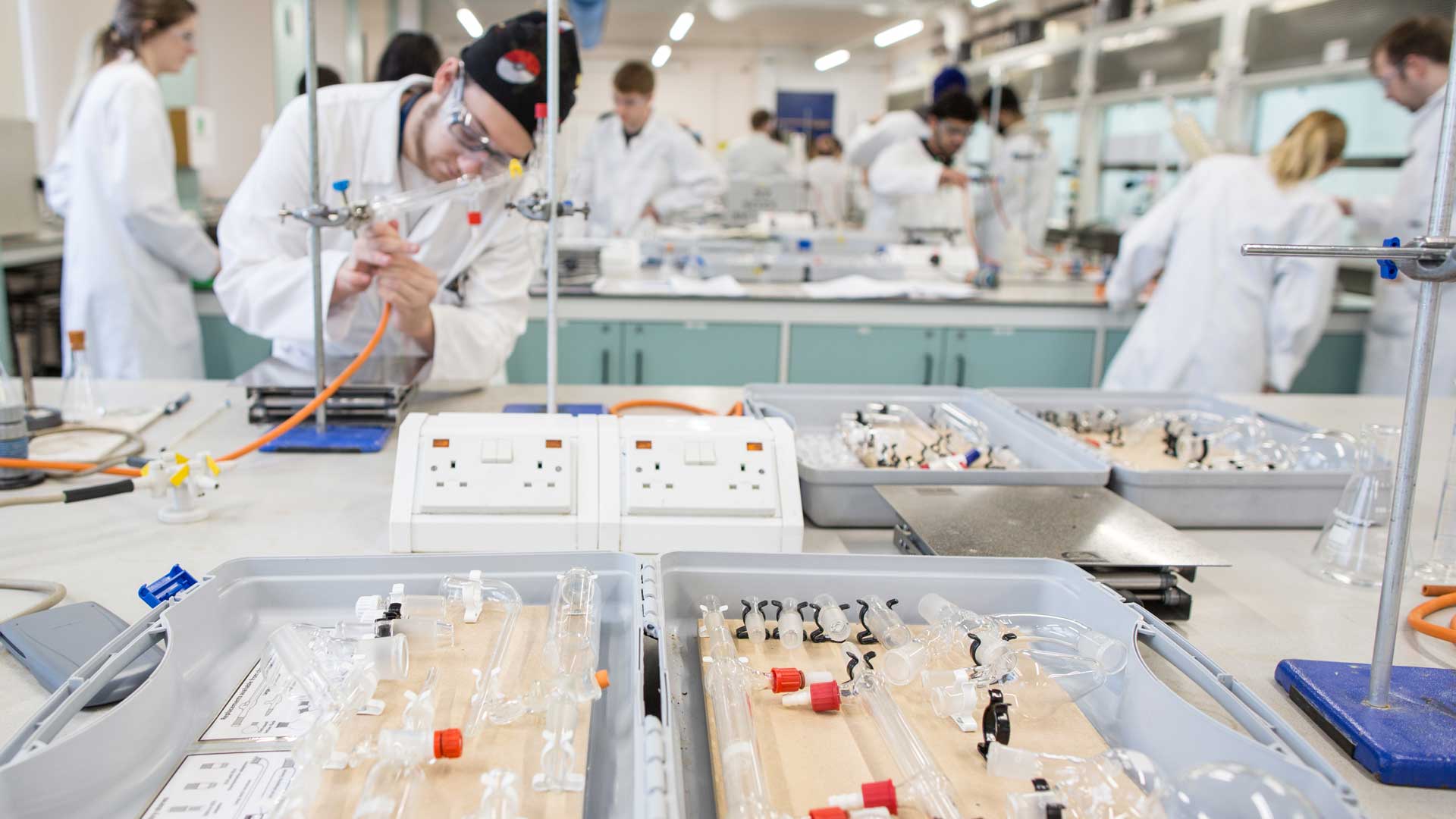
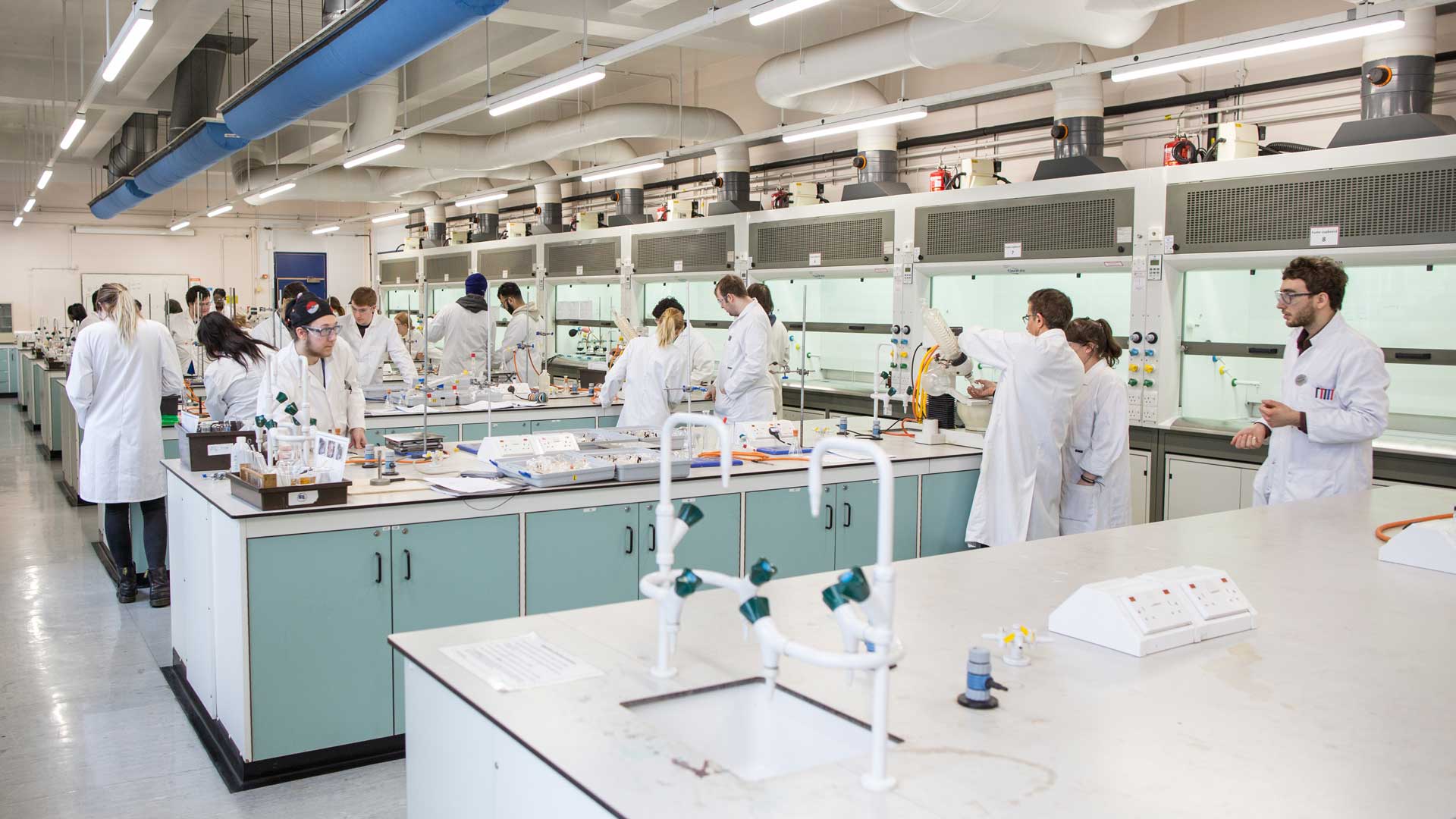
You’ll be taught by leading academics through lectures, seminars, and lab sessions, which will be supplemented by modern instruments in our specialist chemistry labs. Following your first two years in the course, you’ll put your knowledge and skills to the test by spending a year in a research group within a university.
Career opportunities after the course *

Data Analysts

Graduate Managers

Health and Safety Officers

Environmental Consultants

Operations Coordinators

*Lightcast

Who can apply?

Entry Requirements

BBB-BCC at A Level including a minimum grade B in Chemistry. The endorsement for practical work is an essential part of Science A Level study, and is a requirement for entry to our degree course.
DDM-DMM in BTEC Level 3 Extended Diploma in Applied Science.
120-104 UCAS points including a minimum grade B in Chemistry at A Level.
Access to Higher Education Diploma with 45 Level 3 credits at Merit with at least 21 in Chemistry.
120-104 UCAS tariff points from International Baccalaureate qualifications, including Higher Level Chemistry at grade 5.


If you do not have the appropriate qualifications for direct entry to this degree you may be able to apply to our Science Extended Degree (BCF0).

If your first language is not English, you will need to meet the minimum requirements of an English Language qualification. The minimum for IELTS is 6.0 overall with no element lower than 5.5, or equivalent. Read more about the University’s entry requirements for students outside of the UK on our International Entry Requirements page.

Other suitable experience or qualifications will be considered. For further information please see the University's minimum entry requirements.

What will you learn?

Course Details

This module introduces you to the chemistry of the elements. Starting with the earliest known chemical events in the universe, this module discusses the elements, their origin, structure and properties before looking at the structure and bonding in and reactions of chemical compounds and encompasses a number of areas of (mostly) main group chemistry including, but not limited to, the constituents of the earth's crust and the chemistry of the atmosphere.

This module teaches you to recognise a range of functional groups and to name systematically compounds that contain them. Structure and bonding in organic compounds are discussed, as are the concepts of the octet rule, orbital hybridisation, formal charge, bond polarisation and resonance. The importance of molecular geometry is introduced and the basic principles of molecular conformation and of stereochemistry are covered. In preparation for the chemistry to follow, an integrated treatment of the 'language of chemical change' is presented. The ideas of mechanism and reaction intermediates are met, together with the curly arrow symbolism which chemists use to represent the electron movement inherent in chemical reactions. In the second half of the module, the chemistry of the principal functional groups is considered, using the ideas developed earlier. The lecture programme is reinforced by regular tutorials in which problems are worked. Running parallel to the lecture programme is a continuously assessed practical course that introduces you to the basic techniques of preparative organic chemistry.

This module covers four areas of physical chemistry: Units, Conversions and the Properties of ideal and non-ideal Gases, Solution Chemistry of Acids, Bases and Salts, Reaction Kinetics and Catalysis, and Introductory Thermodynamics

This module aims to introduce students from diverse backgrounds to the range of skills required in modern analytical science and illustrate how analytical methodology underpins scientific investigation across the conventional discipline boundaries. The module will build on and develop your prior knowledge of analysis whilst not assuming any particular area of expertise and will also endeavour to improve your numerical, IT and communication skills by illustrating analytical methodology in the context of these key skill areas. This module also aims to develop your ability to obtain and interpret a wide range of spectroscopic data in a systematic and logical fashion. In this way you'll be taught to apply your knowledge to a wide range of new problems and in so doing develop your general problem solving skills. The module will be taught primarily by lectures and tutorials with illustrative practical work to highlight salient points from the lecture material.

This module provides an introduction to the use of computers in the chemical sciences for word processing, data handling and chemical drawing. The module also gives an introduction to the use of molecular modelling software for the understanding of chemical and physical properties of molecules. It will also consolidate the mathematical ability of students entering the course from a variety of backgrounds and provides the essential groundwork in this subject area.

The module provides an introduction to practical chemistry in the major branches of the subject through structured practical exercises. It will be taught in the laboratory and sessions will usually begin with some formal teaching from staff in charge, followed by students carrying out practical and other exercises either alone, or in pairs. Laboratory safety, basic laboratory techniques, data recording and the use of routine equipment will be taught. Research skills and ethics will be included. As the module proceeds the experiments will illustrate the principles taught in lectures.

This module will build on the theory covered in the module Inorganic Chemistry 1, looking primarily at the chemistry of transition metal (d-block) elements. The concepts of coordination chemistry and the bonding in complexes will be introduced, and how the optical and magnetic properties demonstrated by complexes can be explained by Crystal Field Theory. More advanced aspects of coordination chemistry will be introduced, including chelates, macrocycles, organometallic and supramolecular species. The behaviour of solid materials will also be discussed, focussing on band theory to explain semiconductor properties, the effect of defects on properties, and basic crystal structures. The practical component of the module incorporates techniques for the synthesis and characterisation of metal complexes.

This module provides coverage of the more important methods of forming carbon-carbon single and double bonds. Following on from year 1 carbonyl chemistry, some more advanced aspects of carbonyl chemistry will be discussed. Main-group elements and their role in synthesis will also be considered. Retrosynthetic analysis will be introduced in the context of carbonyl chemistry and will be developed to enable you to plan some complex multistep syntheses. The synthesis and reactions of the main classes of simple heterocyclic compounds will be covered. The chemistry of other biologically-important compounds such as carbohydrates amino acids will also be detailed. More advanced aspects of stereochemistry are covered, and the relationship between conformation and reactivity is explored. The module has a practical component which focuses on the use of more advanced techniques for the preparation, isolation and analysis (IR and NMR) of target molecules. A part of the practical session is devoted to the isolation of stereochemically pure products.

This module covers six topics: equilibrium and dynamic electrochemistry, phase equilibria, colloids and colloidal suspensions, colligative properties, kinetics of composite reactions and quantum theory – basic principles and simple applications. With the exception of quantum theory, material in the other areas builds on that presented in year 1.

In this module you'll have the opportunity to consolidate the interpretative skills learnt in the module Analytical Science 1 and extend these to the analysis of spectra from more complex organic molecules. The majority of samples encountered in analytical science are mixtures, you'll be introduced to the basics of the most widely used forms of chromatography and a number of application areas of each will be described including the application of combined separation and spectroscopic techniques. Additionally you'll be introduced to a selection of instrumental analyses including atomic spectroscopy, thermal methods and electrochemical techniques, and statistical methodology which provide solutions to many of the analytical problems which are encountered in modern society. This module aims to develop your abilities in these directions to enable you to design an analytical process whilst further developing your IT, communication and numerical skills.

This module builds on the practical experience gained in the first year and is closely linked to the associated lecture material in modules Inorganic Chemistry 2, Organic Chemistry 2, Physical Chemistry 2 and Analytical Science 2. You'll have the opportunity to use more advanced experimental techniques and instrumentation. Exercises will involve an information search, recording, and interpretation of results. Each exercise may involve more than a single week of practical work and draw on different subject areas. The exercises will involve synthesis, investigation, and characterization and appropriate literature searches. Research skills and record keeping will be included. You'll also have the opportunity to carry out a mini-project and will be given an outline scheme from which you must produce your own detailed experimental plan in a workshop environment which will be vetted before you begin practical work. A permanent record will be kept of observations and data measurements made as the project proceeds. Weekly planning meetings will be held to assess the progress of the work. At the end of the project another workshop session will be held in which to analyse and interpret the results by discussion with peers before resorting to seeking advice from the lecturer.

You will also choose one optional module in this year. The current optional modules are:

This module introduces you to the industrial manufacture of important chemicals and to core chemical engineering skills of formulating and solving material and energy balances on chemical systems. It introduces the principles of operation and analysis of operations in chemical processes. It develops skills in manipulating laws of conservation of mass and energy, in order to understand individual operations and their interactions within chemical processes. It also introduces the use of computer software packages including chemical engineering simulation software.

This module provides an introduction to selected topics in modern biology, suitable for students of forensic science and chemistry, and provides a basis for further study for those whose interests lie at the interface of the biological and chemical sciences. The module starts with an introduction to the structure and function of biological macromolecules and includes a basic account of the covalent and non-covalent aspects of protein structure. Subsequently an introduction to enzyme structure and function is given followed by an outline of basic metabolism. The module covers the elements of cellular and molecular biology including sufficient to understand such techniques as gene cloning, PCR and DNA fingerprinting. The concluding part of the module provides coverage of the systems of the human body most relevant to students of forensic science and medicinal chemistry, namely; blood and the cardiovascular system, the gastrointestinal tract, the liver and the kidney.

An overview of commonly encountered evidence types at crime scenes will be provided, with a focus on crime scene specific issues, such as location, recovery, packaging contamination, health and safety. In addition, the forensic significance of the evidence will be discussed reflecting the new roles of the crime scene practitioner in formulating submission strategies, as well as crime scene management. Crime scene examination strategies will be covered, along with strategies to preserve the continuity and integrity of the evidence and information obtained, as well as photography. An introduction to the legal system will be provided along with report production and defending witness statements in a mock court of law. A series of practical will also be provided where the students place the theory in to practice. You will also be introduced to Digital Forensics and Cyber Crime.

For more information on when and how we update our modules please see the ‘Legal Information’ section below.

Training will normally take place across a 48-week period in a suitable organisation, usually a university laboratory. The exact nature of the training will vary depending on the specific background and demands of individual students and the opportunities available within the differing laboratory environments. Assistance is provided to help you find a suitable laboratory research position. Once a position is secured, you'll be instructed about the assessment criteria of the module via a workshop. You'll usually be appraised up to twice a year by a University tutor. This module provides an opportunity for you to experience research within a laboratory related to your chosen pathway and at the same time improves your technical, social and transferable skills. The practical content of this module differs from that in the Investigative Project Module in that it is the your day-to-day laboratory work that is assessed and not a specific project. You are also assessed on your laboratory note-book keeping and on the production of training portfolio that reflects the demands of continuing professional development and reflective practice.

You'll carry out a substantial research project, under supervision, in an industrial or academic research environment, during the course of Year 3 of the MChem/MSci integrated Master’s degrees. The subject of the research may be any relevant and topical area of chemistry, forensic or pharmaceutical science, but must be agreed in advance between you, your project supervisor and the University course or module leader.

This module is taken by students during Year 3 of an integrated Masters' degree and covers three aspects of communication of importance in science; the ability to read and understand scientific journal papers, the ability to write a scientific journal paper and the ability to give oral presentations.

This module comprises three strands of chemistry. The inorganic aspect focuses upon the chemistry of the lanthanides and actinides. The occurrence, history, separation and nature of these elements will be discussed. The main part of the work will concentrate on the more contemporary chemistry of these elements such as their use as MRI contrast agents and luminescent properties. The organic section will cover the three main groups of biomolecules including amino acids, proteins and peptides; nucleotides and oligonucleotides; carbohydrates and polysaccharides. The section will focus on the use of small modules as building blocks for the development of biologically active molecules and will introduce requirements for consideration of protection and deprotection strategies and convergent and divergent synthesis techniques. The physical chemistry section will cover some theoretical aspects of the topic, namely spectroscopy and molecular reaction dynamics. Three types of spectroscopy, namely rotational, vibrational and electronic, will be discussed. In each case the nature of the excitations involved, the selection rules which must be applied, and the relationship with structural parameters will be studied.

You will also choose one optional module in this year. The current optional modules are:

In this module the basic description of separation science provided earlier in the course will be expanded and extended. Recent developments in the subject will be discussed in terms of basic chromatographic theory. The application of separation methods to the identification and quantification of drugs and their metabolites in toxicological samples will be discussed. The metabolism of drugs, in so far as this process impinges upon the analytical methodology employed in toxicological analysis, together with the effects of sample type and their storage will be highlighted.

In this module you'll be provided with an overview of contemporary spectroscopic techniques and their relevant areas of application. In mass spectrometry you'll be introduced to the range of ionisation and scanning techniques and the ways in which the coupling of chromatographic methods with mass spectrometry can enhance and extend the capabilities of both methods. In NMR you'll have the opportunity to consider a range of advanced experimental methods to enhance the quality of the analytical information which can be obtained. Modern electroanalysis is a powerful and versatile analytical tool for investigating a wide range of analytical problems. This module will introduce you to a selection of these methods and will illustrate the practicalities, uses and limitations of these techniques. Sensor technologies represent a rapidly expanding area of analytical science. The module aims to familiarise you with the wide range of fields, which contribute to sensor developments, and then to reinforce this knowledge with pertinent examples such as glucose monitoring systems for diabetics.

For more information on when and how we update our modules please see the ‘Legal Information’ section below.

A chemically-based independent research programme. Academic supervisors will outline the aims of the project and direct you to the most recent literature. Before undertaking experimentation, you'll be expected to undertake a comprehensive review of the literature related to your project and to evaluate this literature. You'll then have the opportunity to plan your project in light of the current state of the field of research. You'll be given some advice on research methods but will be expected to lead the planning yourself. Your project will be expected to show depth and involve advanced laboratory and instrumental techniques. Your project will also be open ended and you'll be expected to review progress regularly and modify research plans accordingly. Group projects will also be encouraged, though you'll also work independently. You'll be required to outline your research plans via an oral at a mini-conference in the early stages of the project and then present your results, interpretation and conclusions on a poster, which you'll defend at a poster day once the project is completed.

This module draws together the basic concepts of synthesis and reaction mechanisms in the context of providing methods for designing suitable synthetic routes to target compounds and also extends the range of reaction types to include pericyclic reactions. The module also introduces contemporary preparative methods for the synthesis of organic compounds. Further aspects relating to designing a synthesis and the connection between design and retrosynthetic principles are covered. The selectivity of reactions and the concepts of regio-, chemo-, stereo- and enantioselectivity are developed and expanded as are the rules governing pericyclic reactions. The reaction mechanism component draws together concepts in both physical and mechanistic organic chemistry; this section of the course covers those techniques that can be used to differentiate between mechanistic types. The use of product analysis, activation parameters, linear free energy relationships and isotope effects to determine reaction mechanisms are included.

This module covers various aspects of advanced physical chemistry. Polymers are an industrially important material with applications in clothing, structural materials, coatings, data storage, etc. This module covers aspects of their synthesis and relates their chemical and structural properties to their applications. The properties of surfaces and the interaction of gas molecules with surfaces will be discussed. Different theories of adsorption will also be compared. The kinetics of surface reactions will be related to the mechanism of the reaction. The application of surface science type measurements in developing an understanding of how atoms and molecules adsorb on surfaces will be covered. Central to chemistry is being able to relate observation made in the laboratory to behaviour at the atomistic level and equally to use the interaction of atoms and molecules to derive quantities that can be measured at the macro-level. Thus statistical thermodynamics will be introduced and used to derive fundamental properties. Atomistic modelling also provides a view into the molecular world and after reviewing the fundamentals of quantum mechanics, the methods for approximating multi electron systems will be introduced and the applications in computational chemistry explored. The module will also provide you with a good knowledge in interfaces and catalysis, the principles of theoretical chemistry and further develop problem solving skills, especially to unfamiliar problems.

The module will build upon previously encountered material on structure and bonding in inorganic chemistry and will include symmetry and group theory, transition metal organometallic chemistry, electron deficiency and clusters. Reaction mechanisms at transition metal sites will be covered with an emphasis on how these apply in industrially relevant catalytic processes. The module will also cover NMR spectroscopy methods for the characterisation and dynamic study of inorganic systems. The module will also cover the photophysical and photochemical properties of transition metal complexes as well as bioinorganic chemistry and the pharmaceutical applications of metal complexes. An emphasis will be placed on recent cutting-edge developments in the literature.

You will also choose one optional module in this year. You should not choose modules Analytical Science 3 or Analytical Science 4 if previously chosen in Year 3. The current optional modules are:

In this module the basic description of separation science provided earlier in the course will be expanded and extended. Recent developments in the subject will be discussed in terms of basic chromatographic theory. The application of separation methods to the identification and quantification of drugs and their metabolites in toxicological samples will be discussed. The metabolism of drugs, in so far as this process impinges upon the analytical methodology employed in toxicological analysis, together with the effects of sample type and their storage will be highlighted.

This module covers the forensic investigation of evidence building on material delivered in the second year modules. The material covered will also include general forensic science principles and how they are applied to investigations. Such principles include Bayesian Inference and these will also be applied to biological and non-biological evidence types such as forensic genetics, body fluid identification, taphonomy, impressions, drugs and toxicology.

The relationship between the forensic scientist and the justice system will be explored with a view to addressing aspects of criminal and civil law. Aspects of presentation of evidence as well as the role and responsibility of the expert witness will also be explored. The requirements of quality systems will be considered within context of presenting robust evidence; as well as the considerations of ethical practice. Quality Assurance procedures and importance of standard operating procedures in relation to accreditation will be explored (i.e. ISO17020 and ISO17025).

In this module you'll be provided with an overview of contemporary spectroscopic techniques and their relevant areas of application. In mass spectrometry you'll be introduced to the range of ionisation and scanning techniques and the ways in which the coupling of chromatographic methods with mass spectrometry can enhance and extend the capabilities of both methods. In NMR you'll have the opportunity to consider a range of advanced experimental methods to enhance the quality of the analytical information which can be obtained. Modern electroanalysis is a powerful and versatile analytical tool for investigating a wide range of analytical problems. This module will introduce you to a selection of these methods and will illustrate the practicalities, uses and limitations of these techniques. Sensor technologies represent a rapidly expanding area of analytical science. The module aims to familiarise you with the wide range of fields, which contribute to sensor developments, and then to reinforce this knowledge with pertinent examples such as glucose monitoring systems for diabetics.

This module provides an introduction to separation processes based on the principles of mass transfer with or without chemical reactions, method of operation, phase equilibria and separating agents used in these operations. It also provides the basis for the building of simple mathematical models to represent the operation of the mass transfer-based separation processes, such as distillation, gas absorption, liquid-liquid extraction.

This module encourages you to develop your knowledge and understanding of sustainable development in industrial systems and to provide approaches to design and assess for sustainability. The module also encompasses large scale experimental work relevant to industrial practice in relation to sustainability. It aims to introduce the concepts of sustainability and carbon and water footprints and provide an overview renewable energy processes and carbon capture technologies. It also examines selected examples in detail, looks at process integration methodologies in design for sustainability and introduces techno-economic and life cycle assessments. The module also enables you to gain experience in experimental group work involving large scale equipment relevant to the technologies, industries and methodologies introduced in the module.

This module focuses on understanding soil properties and their importance in ecological processes. We look at how nutrients and contaminants are held in or are transmitted through the soil for plant uptake and transfer through the ecosystem ultimately impacting on human health. Examples of soil contamination are used to illustrate the challenges that soil pollutants represent to ecosystems and how such locations can be restored. Remediation and restoration of damaged land is a complex task which draws on a variety of different techniques. This module covers soil contaminants, their environmental behaviour and what risk they pose to humans and ecosystems. You'll learn a variety of techniques which can be used to determine concentrations of contaminants within the soil matrix and be able to identify the most appropriate remediation and restoration techniques. You will be introduced to the process of site risk assessment (Phase 1 and Phase 2 site investigation) and ecological field surveys. It is expected that you'll be able to analyse soil properties, determine contamination levels and implement a planting strategy to restore ecological diversity. This module will appeal to anyone interested in understanding environmental pollution and its ecological impacts. It is designed to ensure that you are capable of pursuing the numerous career opportunities available with local authorities and environmental consultancies who both deal with restoration of contaminated/degraded sites.

For more information on when and how we update our modules please see the ‘Legal Information’ section below.

Teaching and Assessment

Discover what to expect from your tutor contact time, assessment methods, and feedback process.

Global Professional Award

At Huddersfield, you’ll study the award-winning Global Professional Award (GPA) alongside your degree* — so you’re ready for the career you want, whatever subject you choose.

Interested in a placement?

Placements

During the MChem degree you will spend year 3 as a student in a research group in a university (usually unpaid). This is when you’ll really be able to see your knowledge in action, pick up invaluable skills for your future career and boost your employability to help you hit the ground running after graduation. This is also an ideal choice if you like the idea of pursuing a PhD after graduation.

This is a compulsory 48 week placement and we provide advice and guidance to help you secure it.

Not only did I work with experts, I also made lifelong friends that helped introduce me to a new culture. My placement provided me with skills that bolster my CV immensely such as learning a new language or practising with a wide range of equipment.

- Owen Harper
Chemistry MChem, placement with Dechema (Research Institute in Germany)

Where could this lead you?

Your Career

As a graduate of this course, you may consider a career in a wide range of scientific areas, including chemical analysis, chemical manufacturing, healthcare, pharmaceutics, environmental consultancy, oil and gas, food and drink, petrochemicals, research and teaching.

Previous graduates from courses in the subject area of Chemistry have gone on to roles such as Analyst at ALS Environmental, Analytical Scientist at Sequani, Microbiological Analyst at Microsearch Laboratories Ltd, QC Analyst at Ernest Jackson & Co Ltd and Operations and Technical Support Assistant at National Nuclear Laboratory.**

**LinkedIn

90%
90% of students from this subject area were employed or in further study within 15 months after graduation.

* HESA Graduate Outcomes 2021/22, UK Domiciled

5th
In Chemistry, we ranked fifth in the country for academic support.

* National Student Survey (NSS), 2025

Top 10
In Chemistry, we ranked in the top 10 for assessment and feedback and teaching on my course.

* National Student Survey (NSS), 2025

What I enjoy most about my current career is the ability to work in a laboratory with chemicals that have unique properties. I was readily prepared for this by the teaching labs at the University of Huddersfield.

- Dylan Watmough
Graduated Chemistry with Industrial Experience MChem, now Operations and Technical Support Assistant at National Nuclear Laboratory.

How much will it cost?

Fees and Finance

£9,790 per year

This information is for Home students applying to study at the University of Huddersfield in the academic year 2026/27.

Please note that tuition fees for subsequent years may rise in line with inflation (RPI-X) and/or Government policy. 

From January 2027 the UK government is launching a new student funding system for people starting university education. Read more about the Lifelong Learning Entitlement (LLE).

For detailed information please visit https://www.hud.ac.uk/study/fees/

£17,600 per year

This information is for international students applying to study at the University of Huddersfield in the academic year 2026/27.

Please note that tuition fees for subsequent years may rise in line with inflation (RPI-X) and/or Government policy. 

For detailed information please visit https://www.hud.ac.uk/international/fees-and-funding/

Home

The tuition fee for a placement year is £1000. If you go on work experience or work placement, you will need to fund your own travel and/or accommodation costs to and from the placement.  Please be aware that if your placement is outside of the UK, you will still be responsible for your travel and living expenses and may need to consider issues like health care and insurance costs.

International

The tuition fee for a placement year is £3,300. If you go on work experience or work placement, you will need to fund your own travel and/or accommodation costs to and from the placement.  Please be aware that if your placement is outside of the UK, you will still be responsible for your travel and living expenses and may need to consider issues like health care and insurance costs.

Scholarships and Bursaries

Discover what additional help you may be eligible for to support your University studies.

Tuition Fee Loans

Find out more about tuition fee loans available to eligible undergraduate students.

What’s included in your fee?

We want you to understand exactly what your fees will cover and what additional costs you may need to budget for when you decide to become a student with us.

If you have any questions about Fees and Finance, please email the Student Finance Team.

Explore More

Why Hud

Explore the unique opportunities and resources that make our institution a top choice for students seeking a well-rounded and future-focused education.

Need more details?

More Info

Careers support

We know you’re coming to university to study on your chosen subject, meet new people and broaden your horizons. However, we also help you to focus on life after you have graduated to ensure that your hard work pays off and you achieve your ambition.

Find out more about careers support

Student support

At the University of Huddersfield, you’ll find support networks and services to help you get ahead in your studies and social life. Whether you study at undergraduate or postgraduate level, you’ll soon discover that you’re never far away from our dedicated staff and resources to help you to navigate through your personal student journey.

See our support services

Teaching Excellence

Great teaching is engaging and inspiring — it helps you reach your full potential and prepares you for the future. We don’t just teach well — we excel — and we have the awards and recognition to prove it.

Find out more

Inspiring Academics

Our researchers carry out world-leading work that makes a real difference to people’s lives. Staff within the Department of Physical and Life Sciences may teach you on this course.

Find out more about our staff

Research Excellence

You’ll be taught by staff who want to support your learning and share the latest knowledge and research.

Find out more

Accommodation

Looking for student accommodation? Huddersfield has you covered. HudLets has a variety of accommodation types to choose from, no matter what your preference. HudLets is the University’s approved accommodation service, run by Huddersfield Students’ Union.

Take a look at your options

Further Study

If you want to continue your learning beyond your undergraduate degree, there is a range of financial support available for postgraduate study, including discounts for Huddersfield graduates.

Discover postgraduate courses
Ask us a question