
Introductory Statistics for Public Health
Start Dates
20 September 2027
Duration
5 weeks, part-time
Credits
15 Masters level credits
Overview
Why choose Huddersfield for this course?
- Gain practical public health data skills using statistical software, with no prior statistics knowledge required.
- Learn from experts who link real-world public health challenges with hands-on analytical training.
- Build confidence to influence decisions and drive meaningful improvements in community wellbeing.
This course is designed for health professionals and anyone passionate about shaping the future of public health. It’s ideal if you want to play an active role in decision-making and help improve the health and wellbeing of the population.
You’ll explore designs used in public health studies and develop the statistical skills needed to analyse data arising from these designs. With a strong focus on practical application, you’ll learn to use statistical software SPSS to interpret findings and communicate insights with confidence.
Throughout the course, you’ll build the ability to critically evaluate how research objectives connect to analytical methods, assess public health practice, and engage in informed debate about data analysis methods in the sector.
We will assume that you have no prior experience in statistics upon application. The focus of the course will be on how to use statistical tools effectively within a public health context, developing the practical skills needed to contribute to evidence-based practice and drive meaningful change.
Entry Requirements
An honours degree (2:1 or above) or equivalent in a subject relevant to public health, such as health professional qualifications, social science subjects, applied sciences, business, leadership, management or administration.
Teaching and Assessment
Discover what to expect from your tutor contact time, assessment methods, and feedback process.
Your Career
Previous graduates from courses in this subject area have gone on to work in a variety of roles such as Advice worker, Care manager, Community development worker, Community education officer, Family support worker, Health improvement practitioner, Health service manager, Youth worker, Equality, diversity and inclusion officer.*
*Source: Prospects
98% Percentage of the University's postgraduate students go on to work and/or further study within fifteen months of graduating.
* HESA Graduate Outcomes 2022/23, UK domiciled.
Fees and Finance
This is the tuition fee for 2026/27 entry. Tuition fees for 2027/28 will be published once the information becomes available.
This information is for Home students applying to study at the University of Huddersfield in the academic year 2026/27.
Modules credits can range from 15 to 60, dependent on the content of the module. Read more about total credits required for a range of degrees, to allow you to calculate the potential total cost.
Please note that tuition fees for subsequent years may rise in line with inflation (RPI-X) and/or Government policy.
For detailed information please visit https://www.hud.ac.uk/study/fees/
Scholarships and Bursaries
Discover what additional help you may be eligible for to support your University studies.
Tuition Fee Loans
Find out more about tuition fee loans available to eligible postgraduate students.
What’s included in your fee?
We want you to understand exactly what your fees will cover and what additional costs you may need to budget for when you decide to become a student with us.
If you have any questions about Fees and Finance, please email the Student Finance Team.
Gallery
See below for a glimpse at some of our facilities.
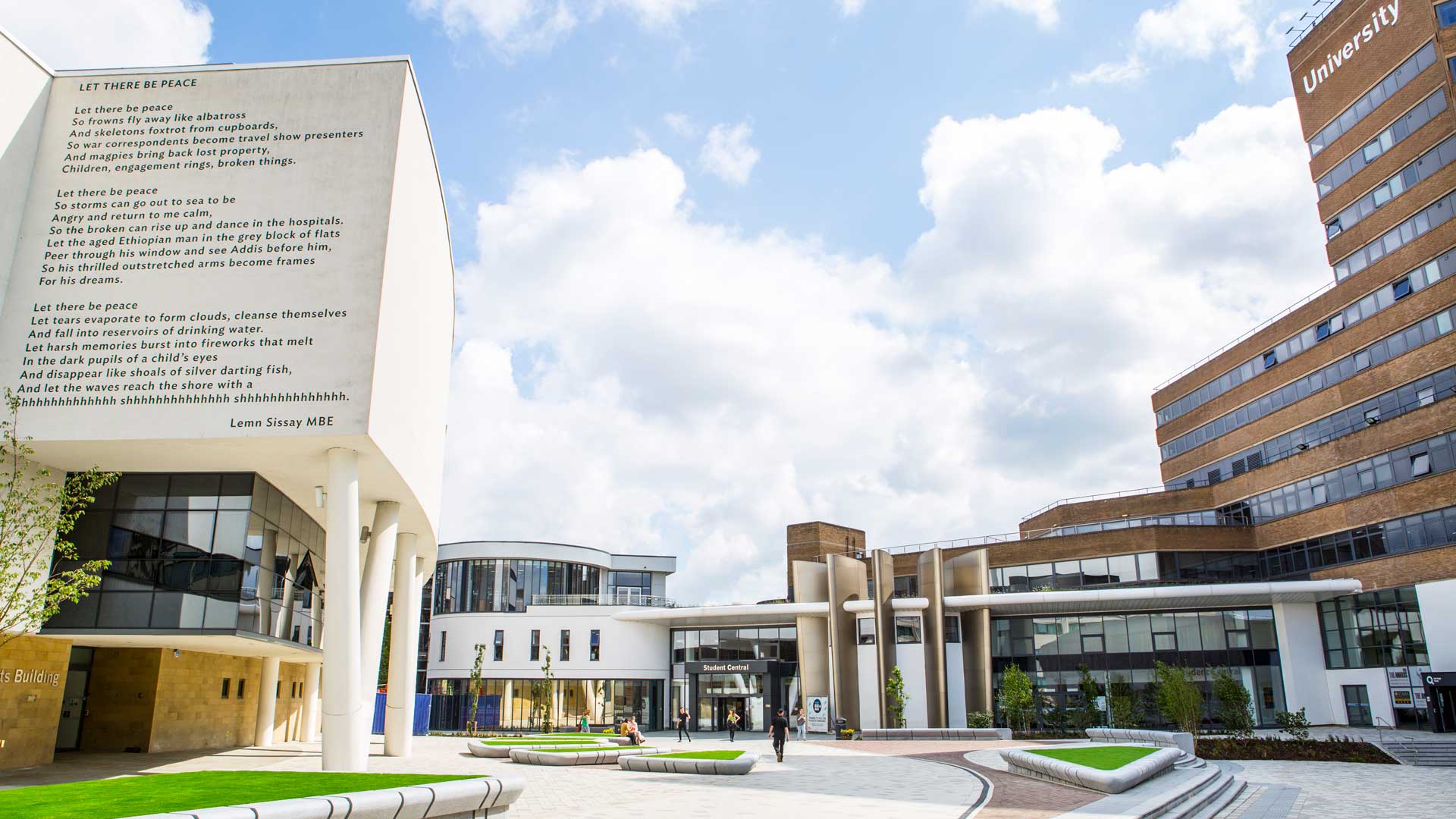
University Campus

Library

Inside the University's extensive library

Students discussing coursework

The University's Campus Kitchen.

Student Central Building
Explore More

Sign up for Emails
Find out more about postgraduate study at Huddersfield and stay updated with the latest news and events.

Student Blogs
Discover what it’s like to study at Huddersfield. Hear from our students and graduates as they share their experiences of life at the University of Huddersfield.

Chat to our students
Want to know more about student life at Huddersfield? Chat to one of our student ambassadors to find out what it’s like to be part of our welcoming community.
Why Hud
Explore the unique opportunities and resources that make our institution a top choice for students seeking a well-rounded and future-focused education.

Explore Huddersfield
Make Huddersfield your home. A Yorkshire town, surrounded by beautiful countryside, with easy access to neighbouring cities; Leeds, Manchester and Sheffield. You’ll find plenty of places to eat, drink, shop and socialise, there’s ambitious plans for future development. Our campus is situated next to the town centre - making your commute a breeze.
Find out more
Your Student Experience
Get involved in great opportunities helping you to make friends from all across the world and create lifelong memories. Join one of over 100 societies with the Students’ Union, experience new cultures through global events, earn whilst you learn and build your skills via our Global Professional Award.
Learn more
Budget Friendly
Huddersfield is not only one of the friendliest towns, it also offers you a lower cost of living than most big cities. This means you could have more money to spend, making your uni experience even better. On campus you’ll also find plenty of facilities and services to help you budget and make your money go further.
Find out more
Sustainability Matters
We’re committed to sustainability and aim to be carbon neutral by 2030. Our plan includes reducing emissions, enhancing biodiversity, and improving wellbeing through sustainable buildings. We’re investing in digital solutions, low-impact travel, and embedding sustainability into teaching and research, investing over £1m in carbon reduction.
Find out more
Committed to Your Future
Since 2015, we’ve invested £198 million to create spaces where you can learn, collaborate and thrive. We’re continuously investing in our campus with your wellbeing in mind—adding features that make our buildings healthier, more supportive and better places for you to succeed.
Read more